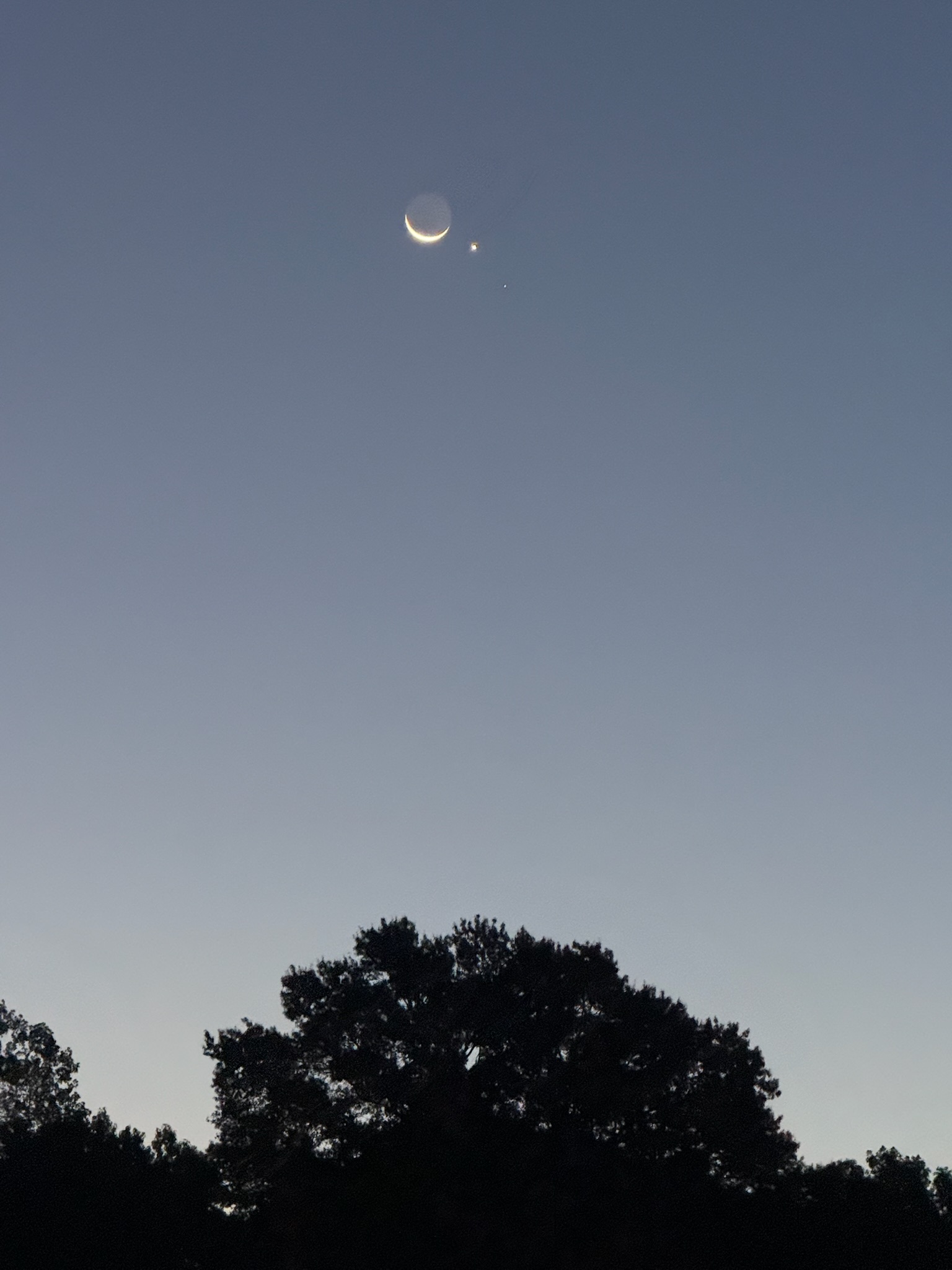
Friday, Sep. 19 — We again wanted to get an early start on our passage, so we got up at 0530. Much to our dismay, the mid-stateroom toilet was broken. Unfortunately, there was no time to worry about it this morning. Fortunately, we have two heads (bathrooms), so we were fine. Here was the crescent moon and a nearby planet glowing brightly pre-dawn.
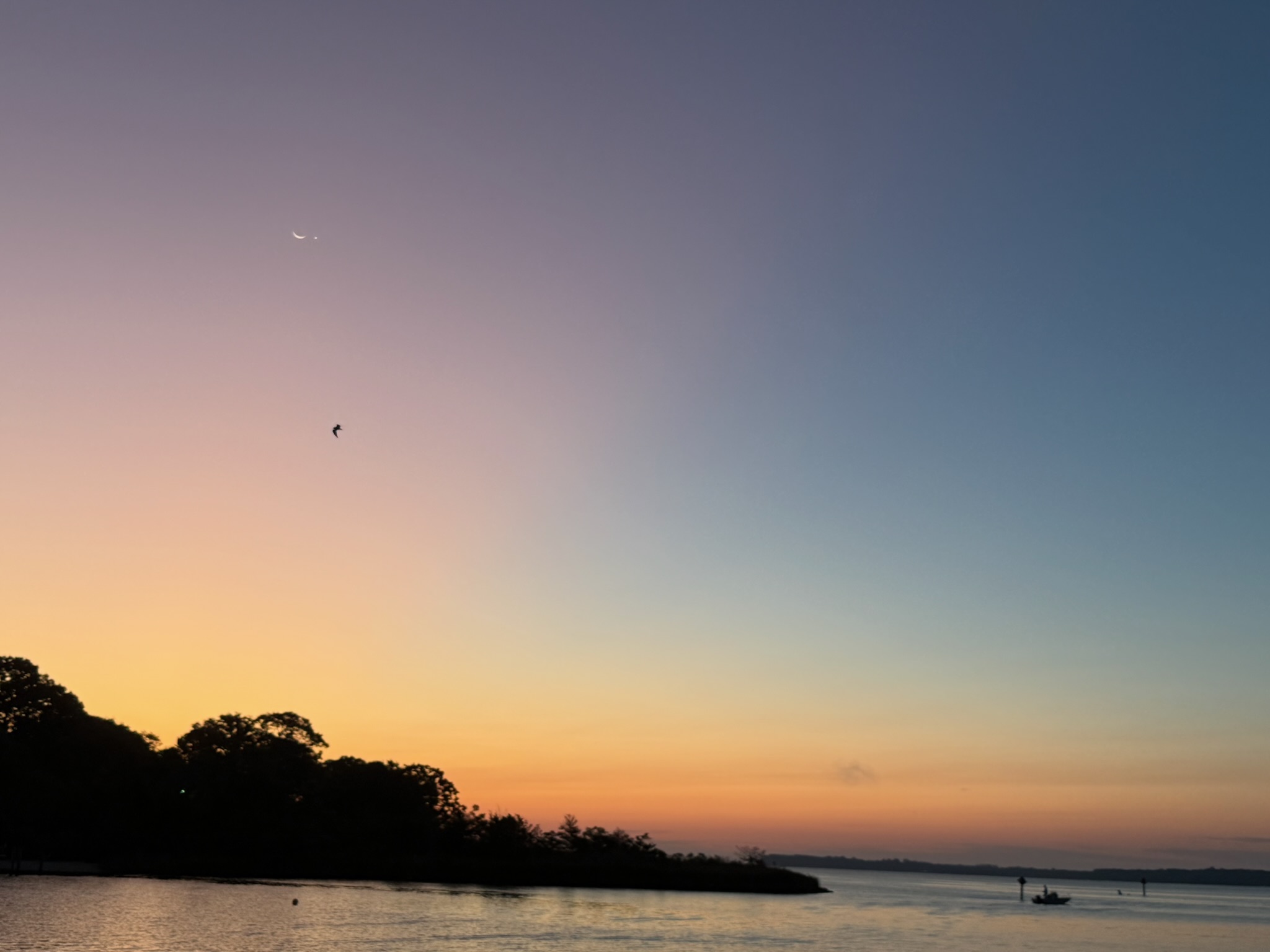
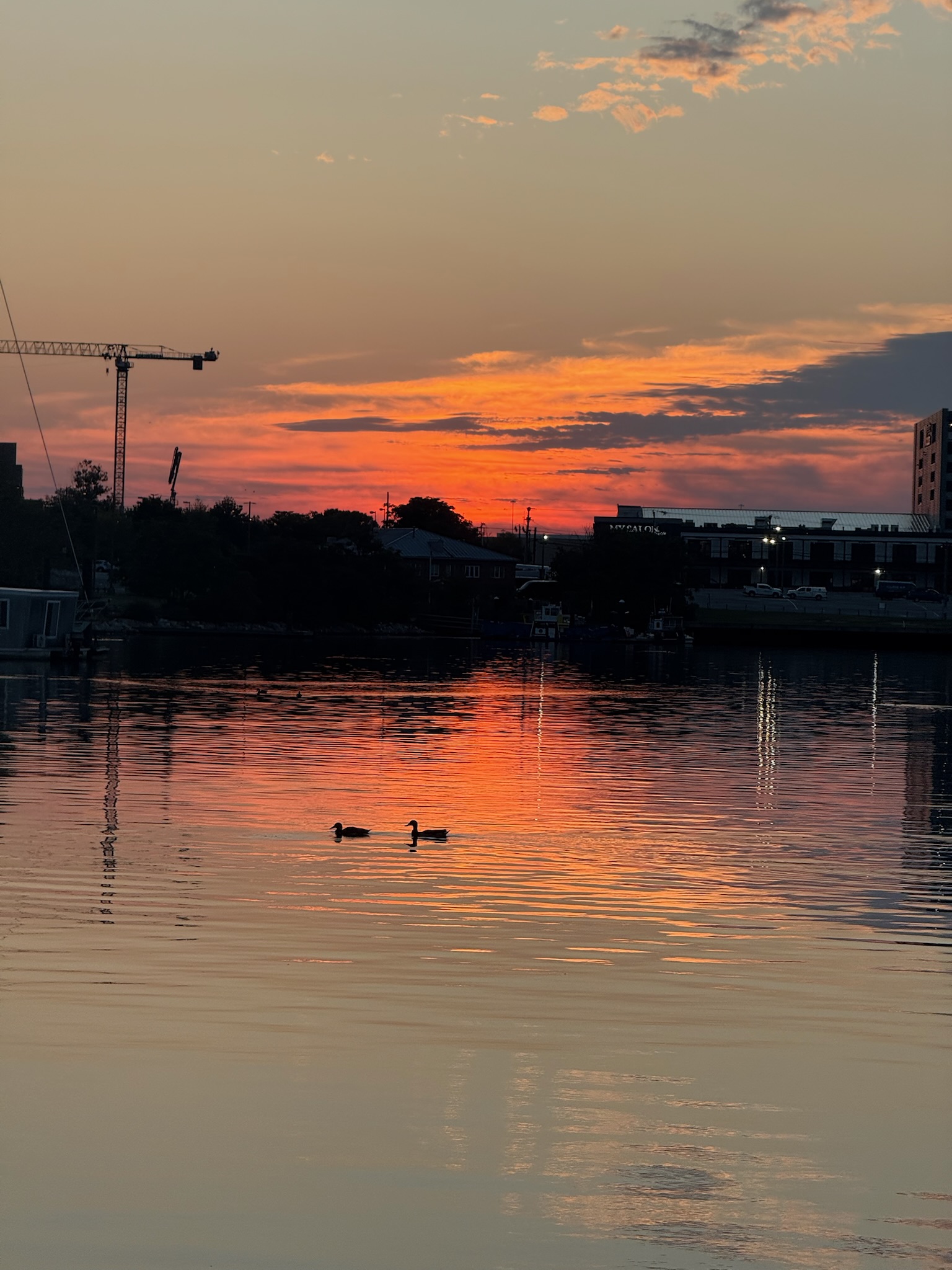
Today the skies were clear, so when we pulled up anchor at 0620, there was enough light to see where we were going. That said, the anchor chain was very muddy, and we did need a flashlight in order to wash the chain. It was a glorious morning, with the sky taking on a rainbow of colors throughout the pre-dawn.
Thursday, September 18, 2025 — Eric has been worried about the transit that we we’re about to make to DC. One of his concerns was speed: we were going to be going upriver against the current. To help maximize speed, he wanted the bottom clean. Even though the bottom hadn’t been too bad the last time it was cleaned in Baltimore, the extreme amount of growth we’d gotten in Little Creek had Eric worried that there may be enough growth to slow Kosmos down.
Eric has been trying to get the diver to come to do another bottom cleaning for over a week now. The diver is very busy in general, and recently had some issues that caused him to be backlogged. The diver promised Eric that he would do the bottom this morning at 0530. Christi was dubious that he’d really show up, but we still got up at 0430 to shower before he arrived (we try not to run water when the divers are working).
We were not surprised when the diver cancelled. But in good news, we were completely ready to go at first light, which was 0620. First light didn’t mean good visibility, though. It was totally overcast, making it a very dark morning. The cloud cover was so thick that we couldn’t see any hint of the sunrise.
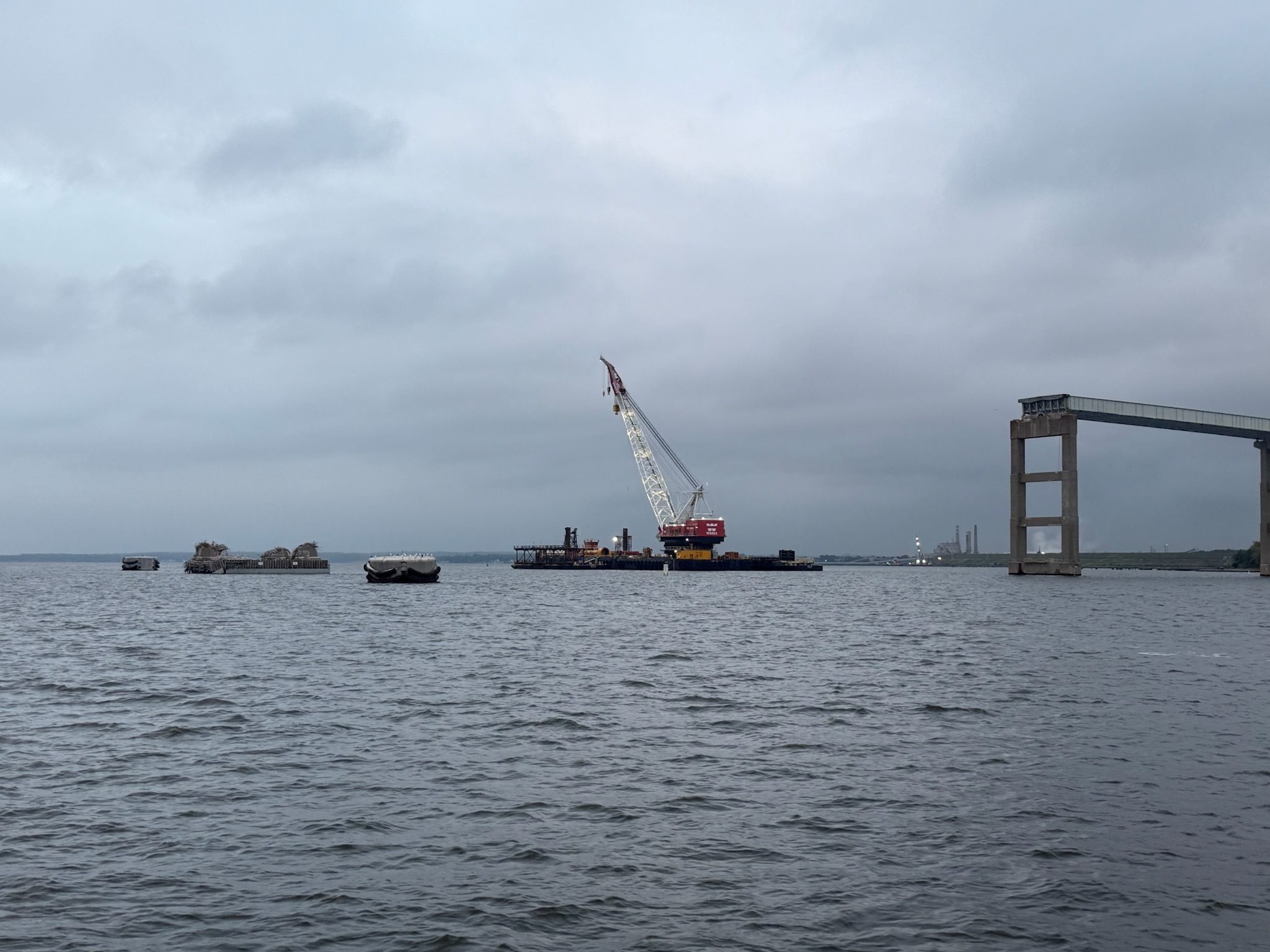
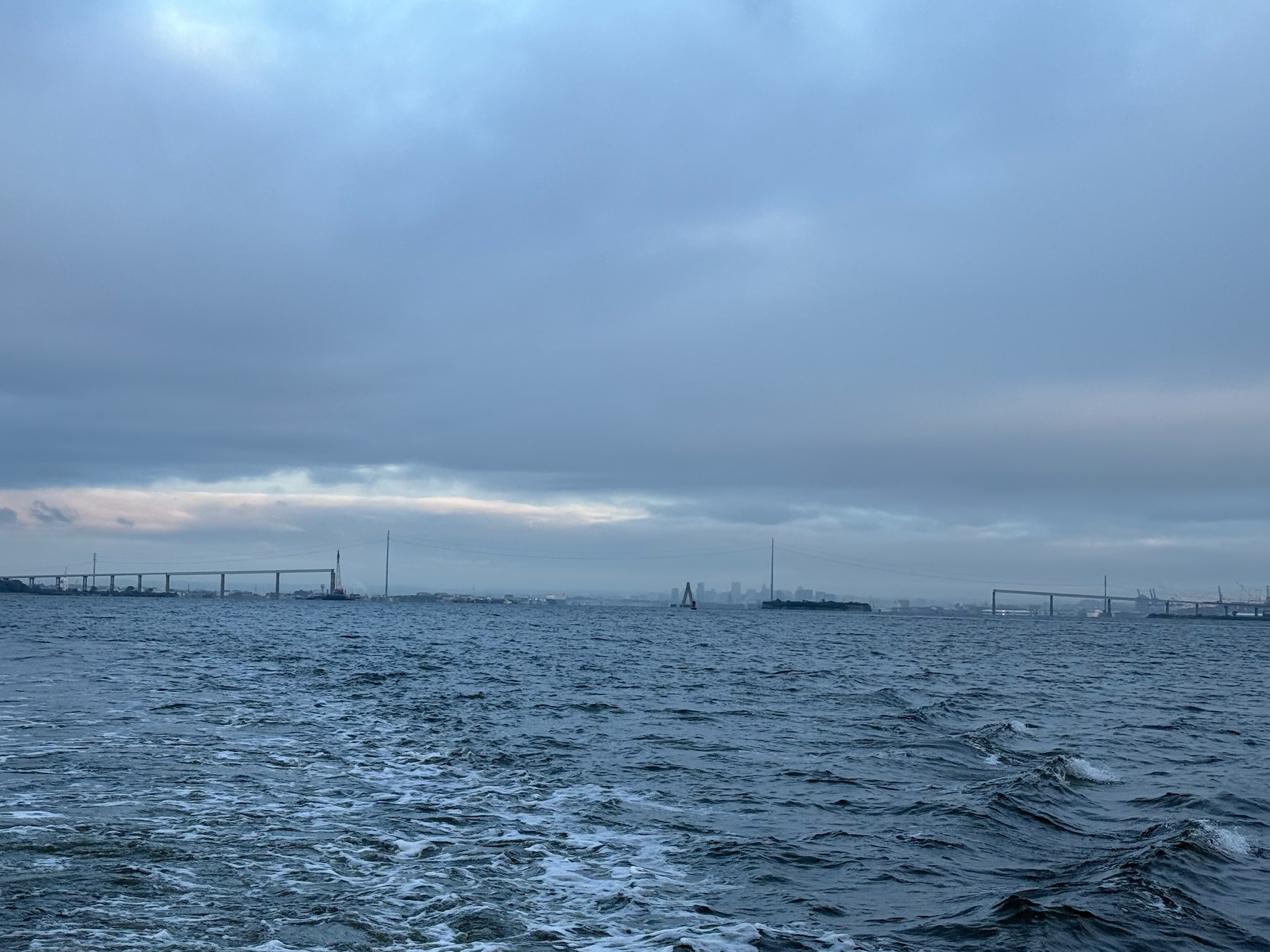
As soon as we’d turned on the radio, we heard regular warnings to be careful near The Francis Scott Key Bridge as they were doing demolition work to the remains in order to clear the way for the construction of the replacement bridge. We were glad to hear they were finally getting started on a new bridge.
Looking back at the Francis Scott Key Bridge remains and Baltimore.
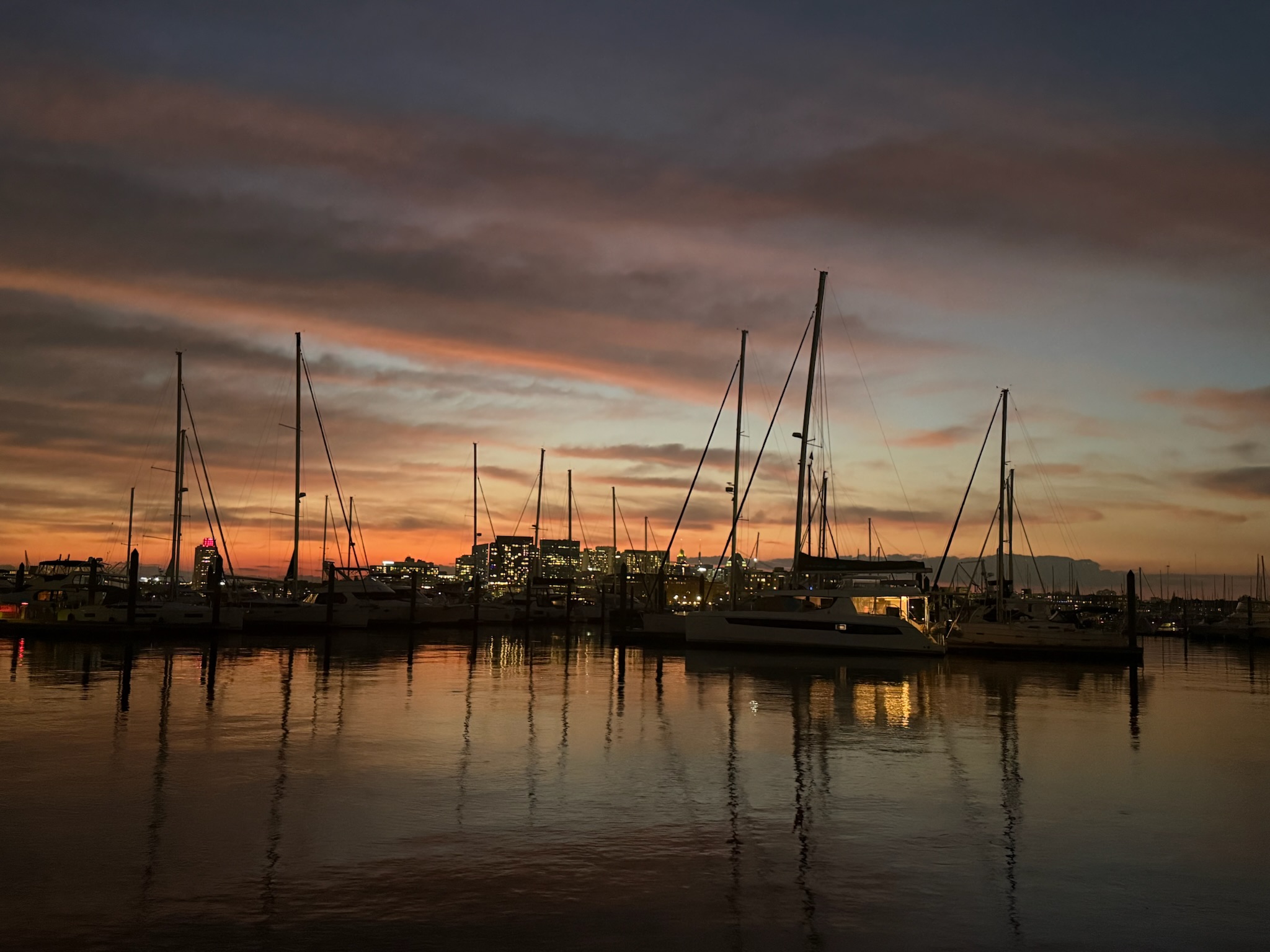
Sunday through Tuesday were quiet days overall. We’d intended to make a three-day trip to Washington DC on Monday, so we spent Sunday getting Kosmos ready for sea. We also went to Safeway to stock up on passage foods. Since the choices for passage foods at Safeway weren’t great, we went for an early dinner at Verde, and each got an extra to-go pizza for the passage. While we were eating dinner, Eric pulled out his phone to check the weather and saw that the forecast had changed dramatically. A storm was coming on Tuesday, so we decided to postpone leaving until after the storm passed. Twilight on Sunday:
We don’t think we’ve mentioned this yet: Eric had ordered a new exhaust elbow for the wing-engine that had arrived a few days ago. On Monday, he decided change the elbow. Once he began working on it, he realized the elbow couldn’t really be separated from the rest of the exhaust; the whole exhaust fitting needed to be replaced. So after cleaning up in the engine room, he spent some time trying to hunt down the full exhaust fitting replacement part. He found it at a supplier in Annapolis and made arrangements to pick it up when we go in Annapolis for the boat show.
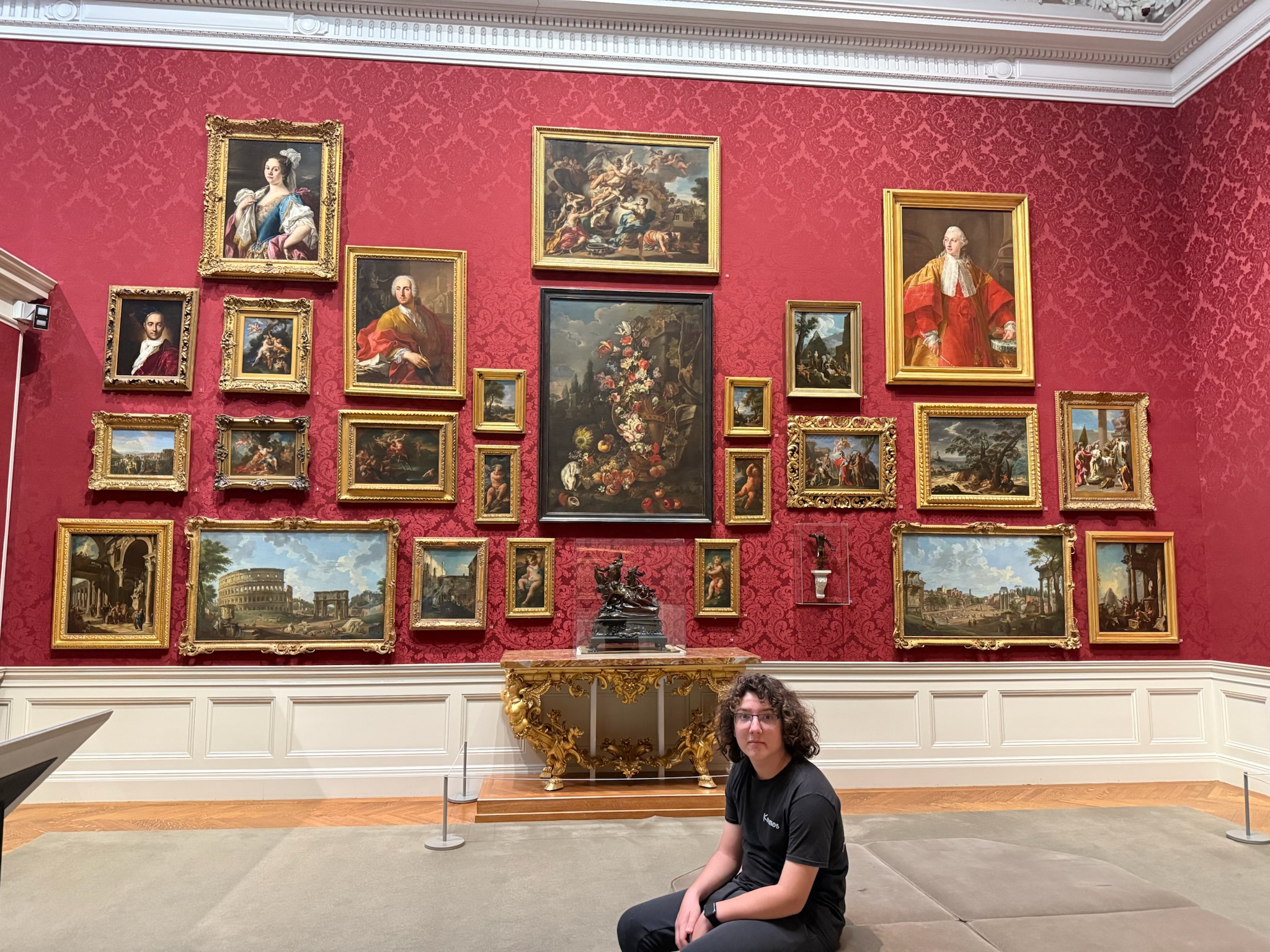
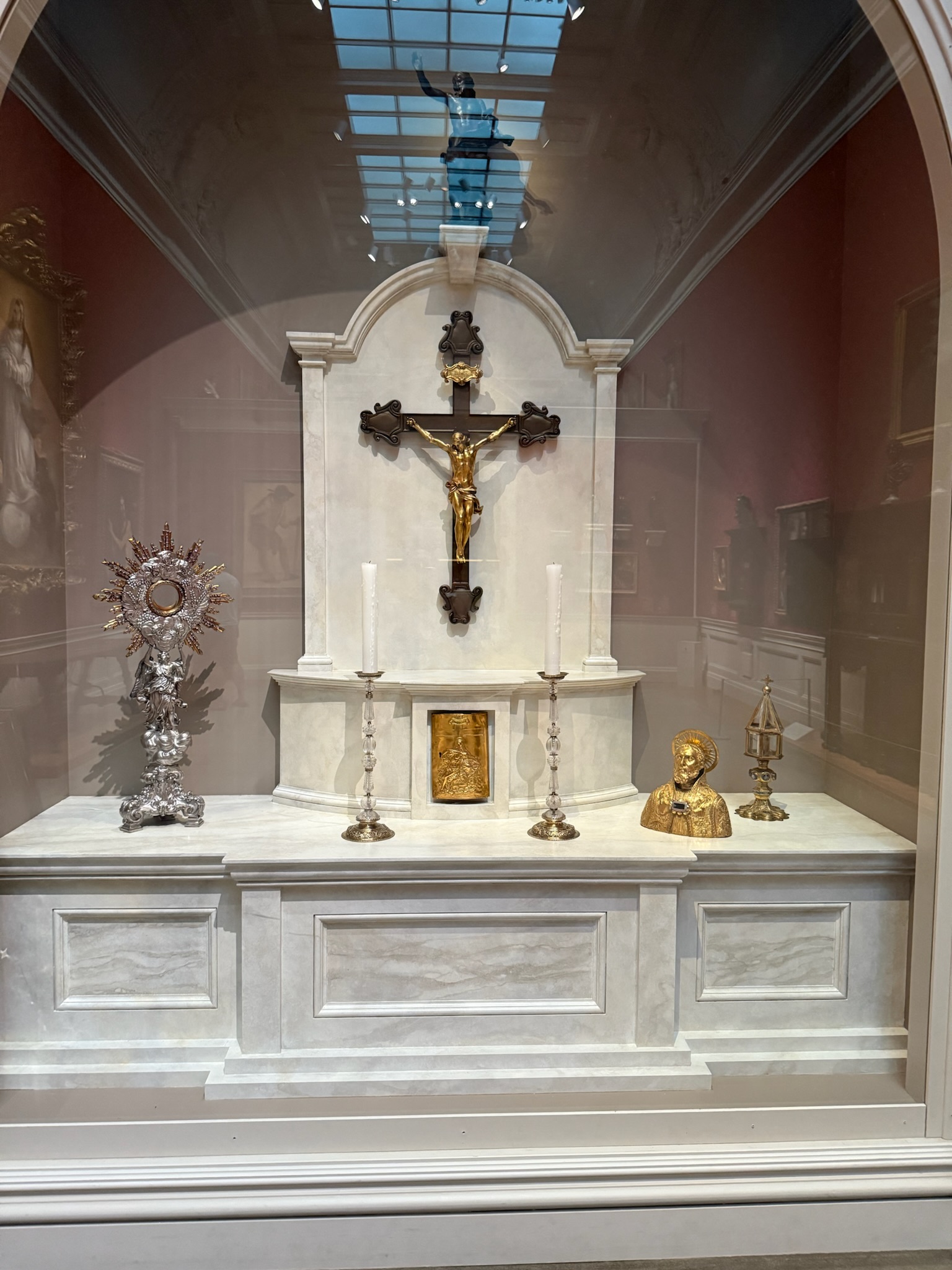
continued… The third room on the third floor of the Charles building was similar to the first two that we’d already seen: very large, spacious rooms filled with large paintings and some other types of art.
There were also exhibits in the walkway that ran along the perimeter of the courtyard below.
Saturday, September 13 — We’d planned to go to The Walters Museum and Peabody Library this afternoon. Keith was opposed to going to yet another museum, but Christi and Eric managed to talk him into going because Walters had a large collection of medieval weaponry and armory.
The museum was almost 3.5 miles away, near the Washington Memorial. We could have taken public transit, but it would have taken at least an hour and involved about a mile of walking each way to/from the transit stops. Even though it was a gorgeous day, we’d walked 8-miles yesterday and just didn’t feel like we could do another extensive day of walking. We called a ride-share, instead, and were door to door in minutes.
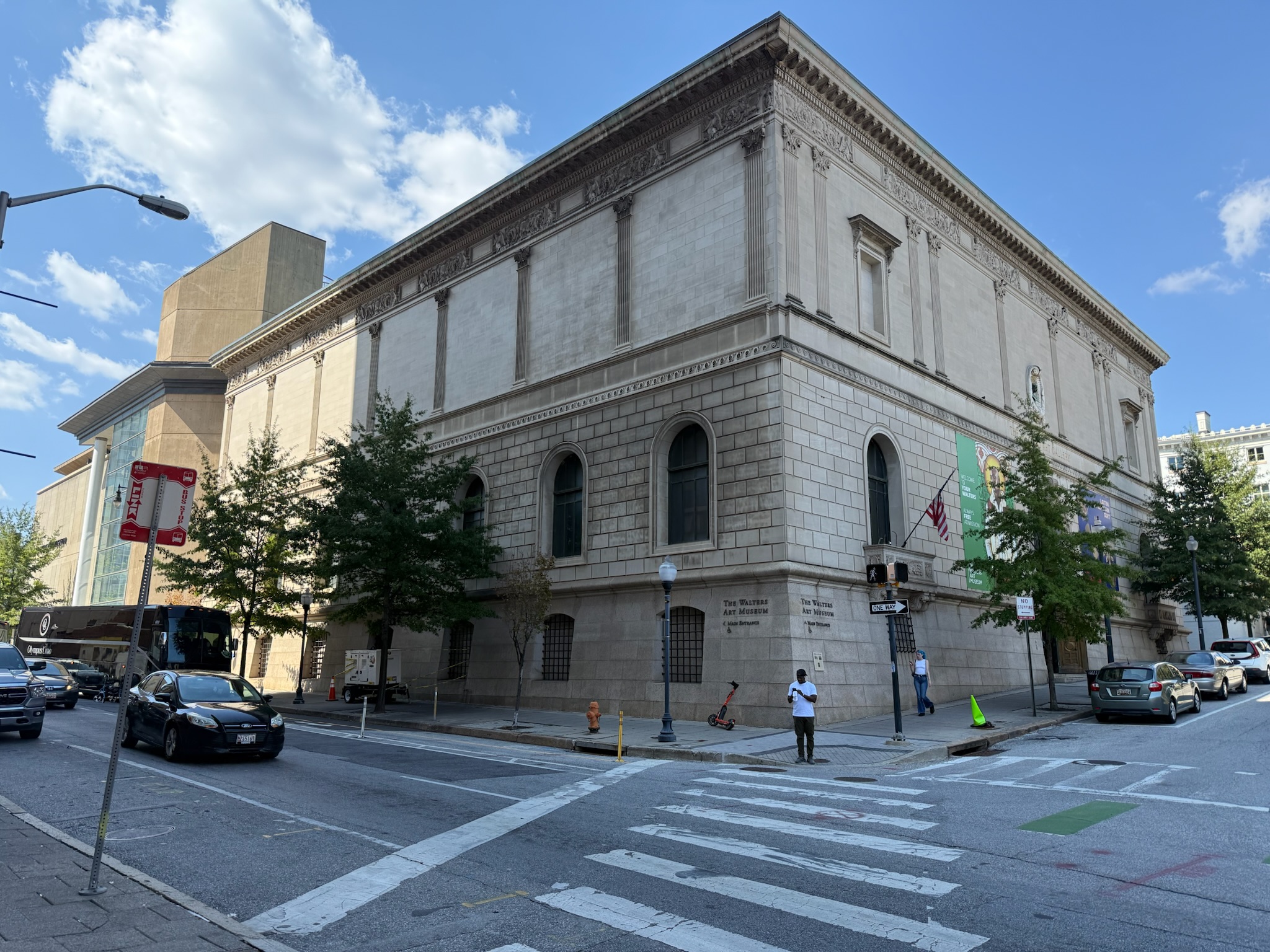
The museum appeared to be two separate buildings that had been fused together. They each had a very different architectural style, so it was kind of weird looking. We entered through a set of doors set in the glass panel towards the left in this photo. Per the map, we were in the Centre building. The more ornate building was the Charles building. The map indicated there was also a third building on the west side of the Charles building called the Hackerman House.
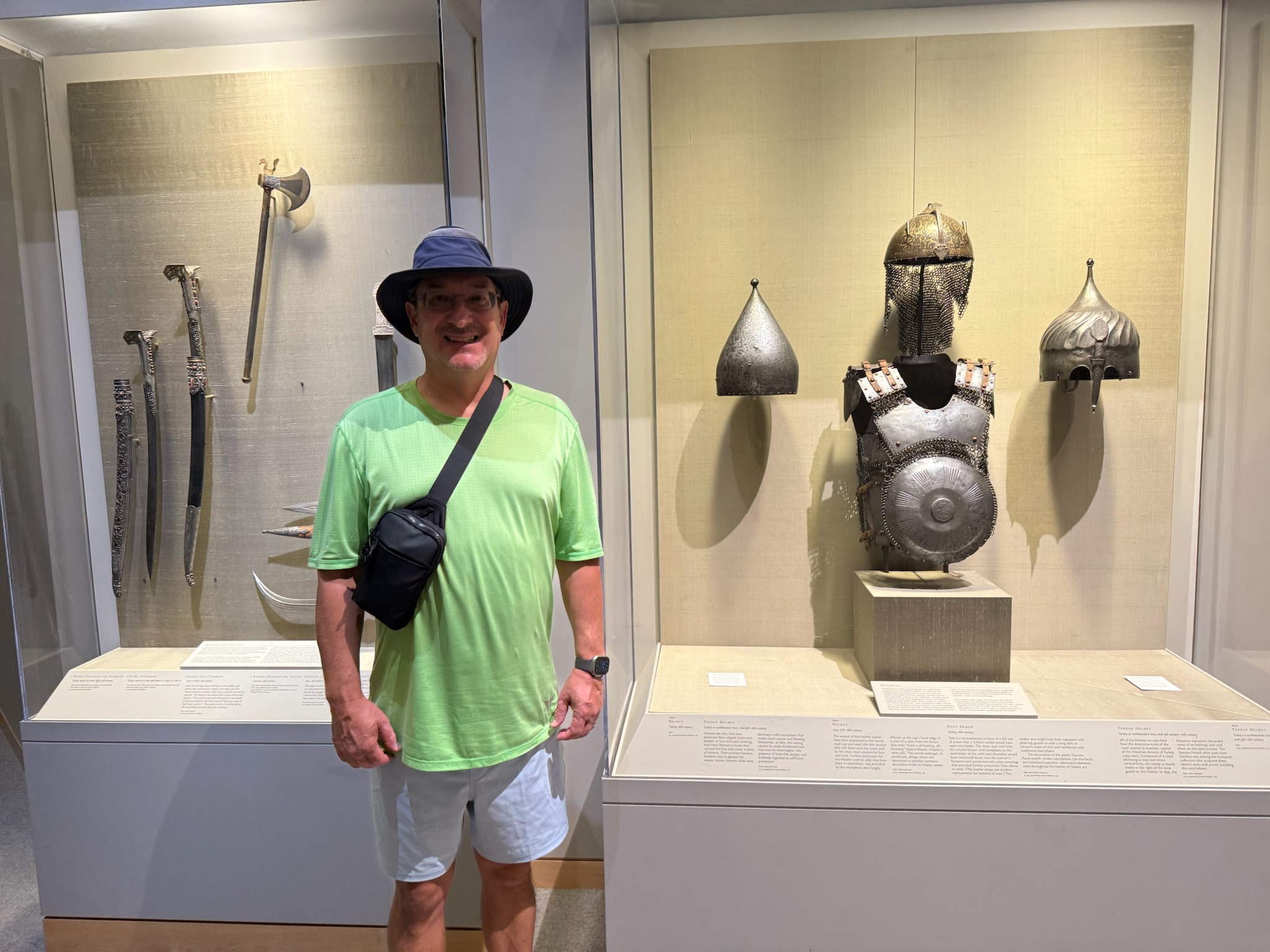
The bus belonged to a tour group of senior citizens from Georgia, and we entered with them. We were delighted to find that admission was completely free for everyone! In order to leave the group behind, we headed up the stairs and started on the 3rd floor of the Centre building, where the medieval exhibit was located. Keith was disappointed to find that the armory exhibit was small.