The National Military Park Museum in Gettysburg, Pennsylvania – Part 2

continued… By February 1861, six more states had seceded: Mississippi, Florida, Alabama, Georgia, Louisiana, and Texas. In March 1861, still using the model set by the founding father’s during the Revolution, they ratified a new Constitution for the Confederate States of America and elected Jefferson Davis as their first president. Like all other governments, they issued currency, bonds and postage stamps.

As we’d learned at the USS Constellation, about 1/4 of the Union navy’s fleet resigned to join the Confederacy, leaving the navy woefully understaffed. We didn’t see a sign that gave statistics of exactly how many military personnel joined the Confederacy in total; the sign we saw said “…hundreds of …US Officers resigned their commissions to join the Confederacy…” One of them was Robert E. Lee, who was recognized as a top military leader who had served with distinction in the Mexican-American War.

The Civil War began about 0430 on April 12, 1861, when Confederate batteries opened on Fort Sumpter. The fort guarded the entrance to Charleston Harbor in South Carolina, making it a strategic location. Both the new Confederate States of America and the United States of America claimed the fort. By the time the battle started, negotiations had already dragged on for months. For the Union, abandoning Sumter would be an admission of weakness, but they knew if they reinforced it, they’d risk war. Lincoln decided to resupply the fort without bringing in any more weapons or troops. The new Confederacy viewed even this as too much, and President Davis gave the order to take the fort. The battle lasted for 34 hours and the Confederates won.

In April and May 1861, Virginia, Arkansas, Tennessee and North Carolina seceded from the US and joined the new Confederate States of America. People in Missouri, Kentucky and Maryland tried to get their states to secede, but failed to rally enough support.
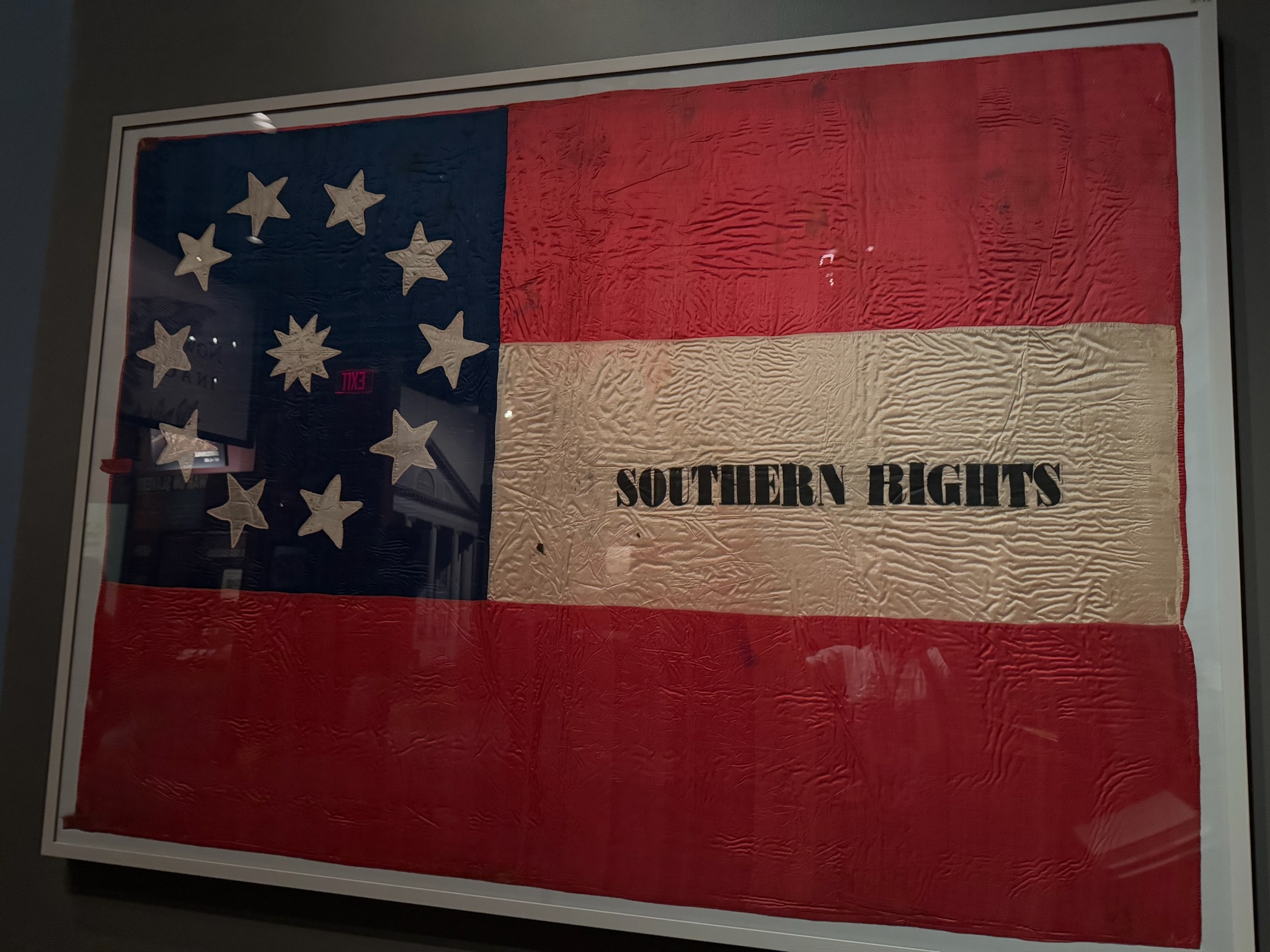
This was the original Confederate States of America flag, adopted in 1861.
Continue reading

The National Military Park Museum and Cyclorama in Gettysburg, Pennsylvania

continued…Much to Keith’s horror, once we got back to Highway 30, Eric and Christi decided to go back to Gettysburg to see if the museum was open. After our mega museum tour this summer, Eric and Christi had promised Keith we could take a break from museums, so he was mad that they’d broken their promise. But Eric and Christi felt like it would be a crime to literally drive through Gettysburg and not stop at a museum about an event that was so important to our country’s history.

As we neared the Military Park, we saw there was a line of cars entering, so we figured it must be open. Parking was free.

Tickets to the museum were $14.75 per person for ages 13 and up. The “Film, Cyclorama and Museum Experience package” was an additional $6 per person. We had no idea what the Cyclorama was, but we were told it was cool and worth the extra money. They also gave us a AAA discount, which helped offset the extra cost.

Continue reading

Drive to Pennsylvania to See the Autumn Leaves

Saturday, October 25 — We decided to take a drive to see the leaves change color. Eric found an app that said that as of this morning, Chambersburg, Pennsylvania was the closest place that had the best ratio of colorful leaves. What was interesting was that last night, it gave us a different town, so clearly, it’s being updated frequently.

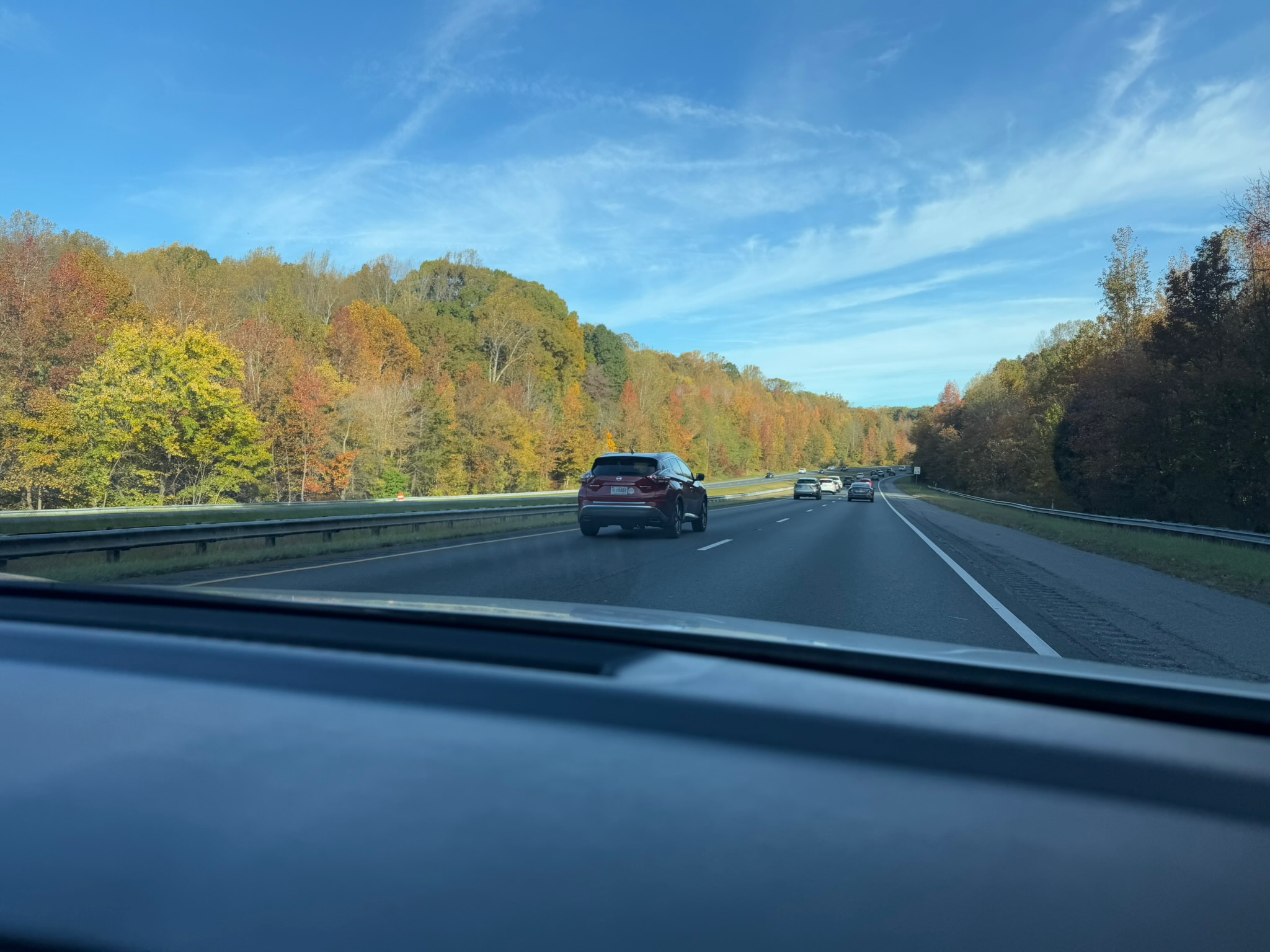
Chambersburg was 2-hours northeast of us. The drive up in an of itself was pretty. This was what the highway looked like most of the way.

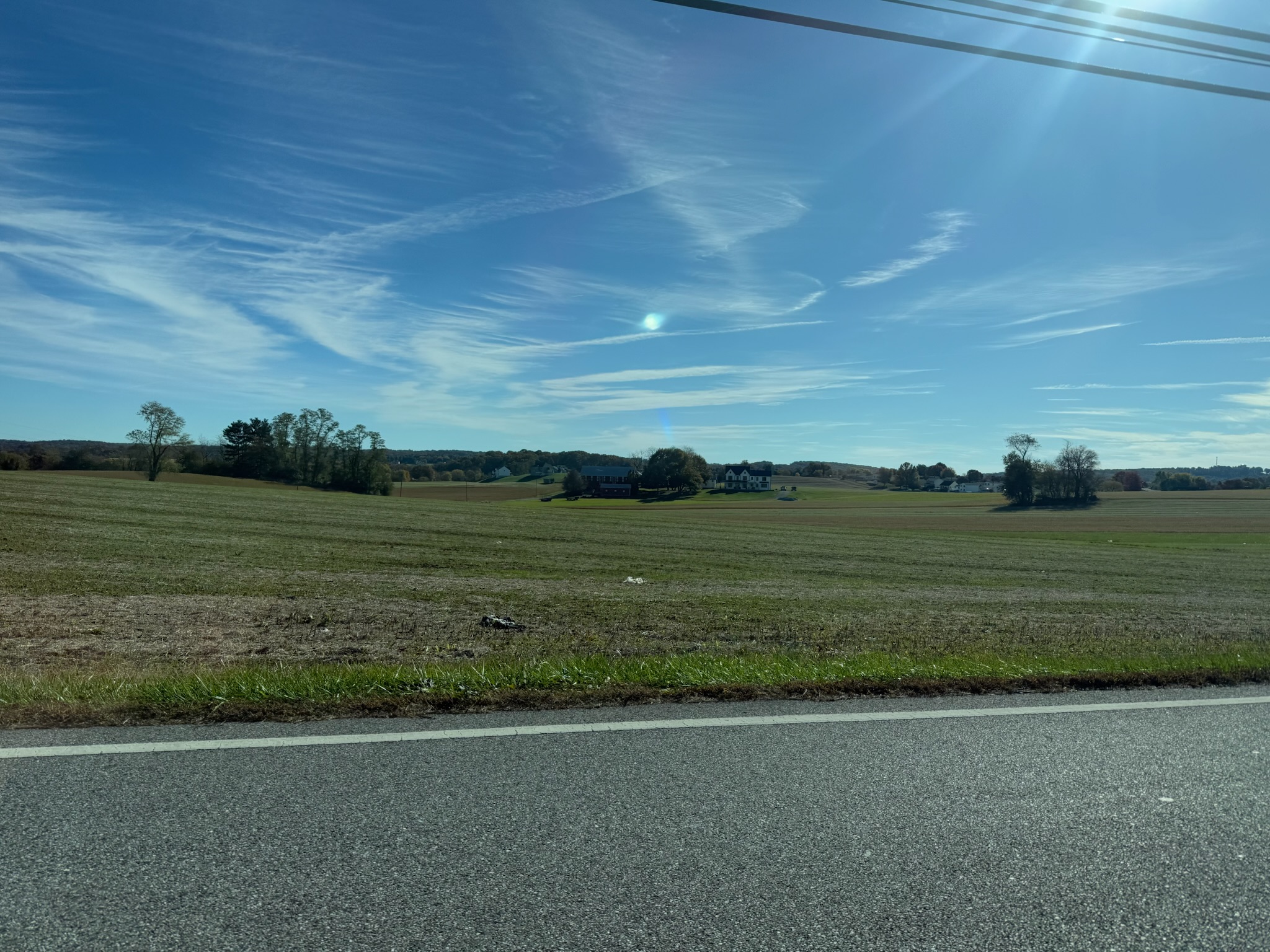
Traffic did seriously slow down outside of Baltimore, but it picked up again as soon as we passed Baltimore. We could see Baltimore from the highway, and we had nostalgia about the month that we’d spent there. Eventually, we left the highway for Highway 97, which was a two-lane road that ran through a rural area that looked to be mostly agricultural.

Continue reading

Keith’s Perspective on Our Second Week in Baltimore/Le point de vue de Keith sur notre deuxième semaine à Baltimore

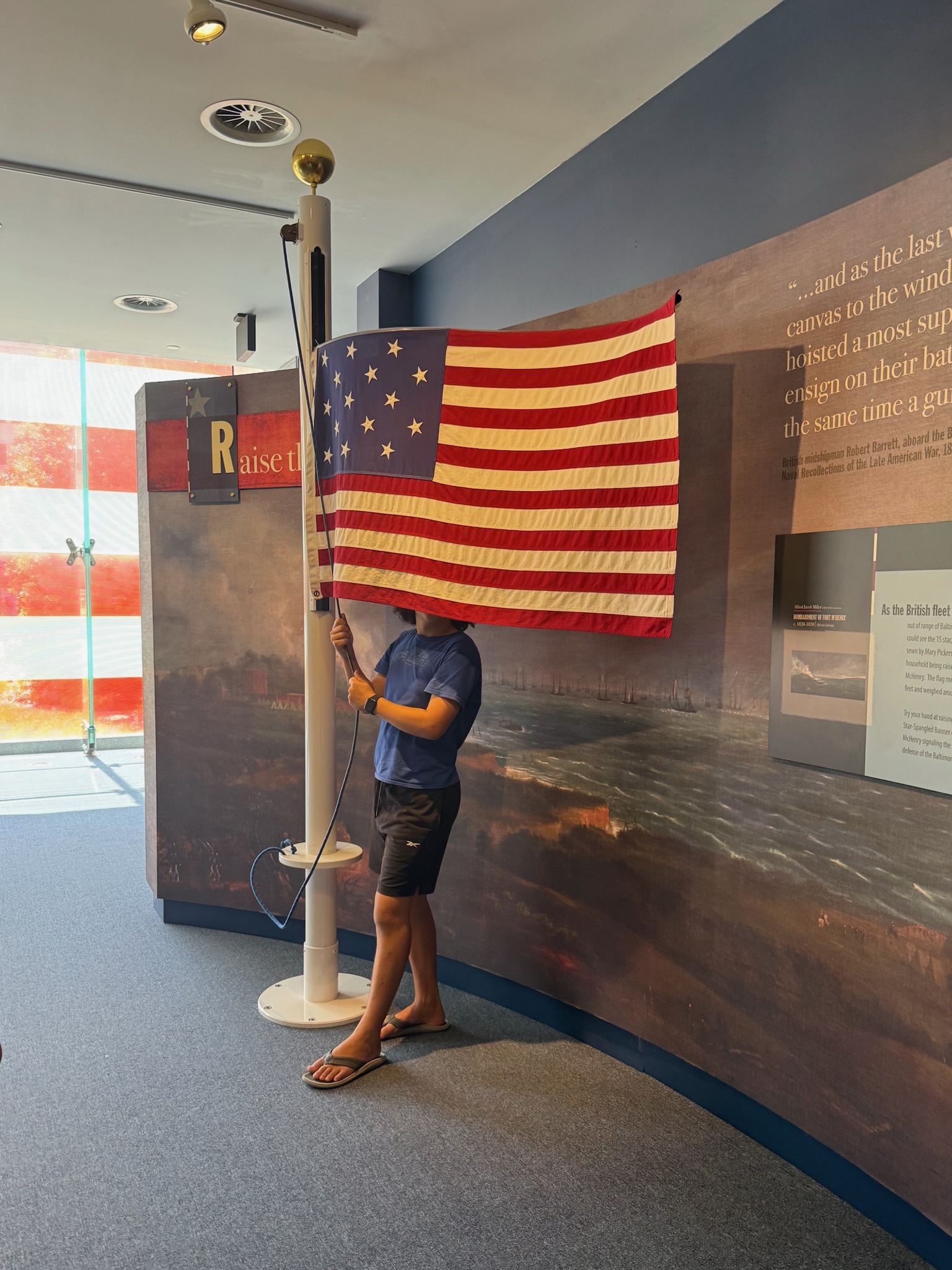
This week has been fun. On Saturday, we went to a tower where they made musket balls during the war with our friends from the Bahamas, Parabola, but it was closed. Instead we went to museum about the American flag. After the museum, we went to lunch at a really weird, but good brunch restaurant. After lunch, they came back to the boat and we played board games. 

Cette semaine était amusante. Samedi nous sommes allés voir une tour où il créaient des balles de mousquet pendant le guerre avec nos amis des Bahamas, Parabola, mais c’était fermé. À la place nous sommes allés à un musée sur le drapeau Américain. Après le musée nous avons mangé à un, très étrange, mais très bon restaurant. Après le déjeuner, nous sommes retournés au bateau et avons joué à des jeux. 

Continue reading

The Turkey Hill Experience in Columbia, Pennsylvania

Wednesday, August 20, 2025 — The hurricane was still south of us and was supposed to pass our latitude in the wee hours of the morning. There was also a cold front from the north, which was keeping the hurricane offshore. The two conflicting weather events meant that today’s forecast was drizzle all day, with an all-day chance of occasional short, stronger showers passing through.

When we’d looked up “fun indoor activities to do with kids,” we found something in Columbia, Pennsylvania called “The Turkey Hill Experience.” It sounded like maybe it was a tour of an ice cream factory. Tickets were $14.45 per adult, and included unlimited ice cream tasting. Since a large ice cream at an ice cream store nowadays was $10, we figured we’d easily get our money’s worth.

The drive up to Columbia took about an hour. The scenery was lush and green. It was probably a gorgeous drive on a sunny day. We arrived a little before noon.

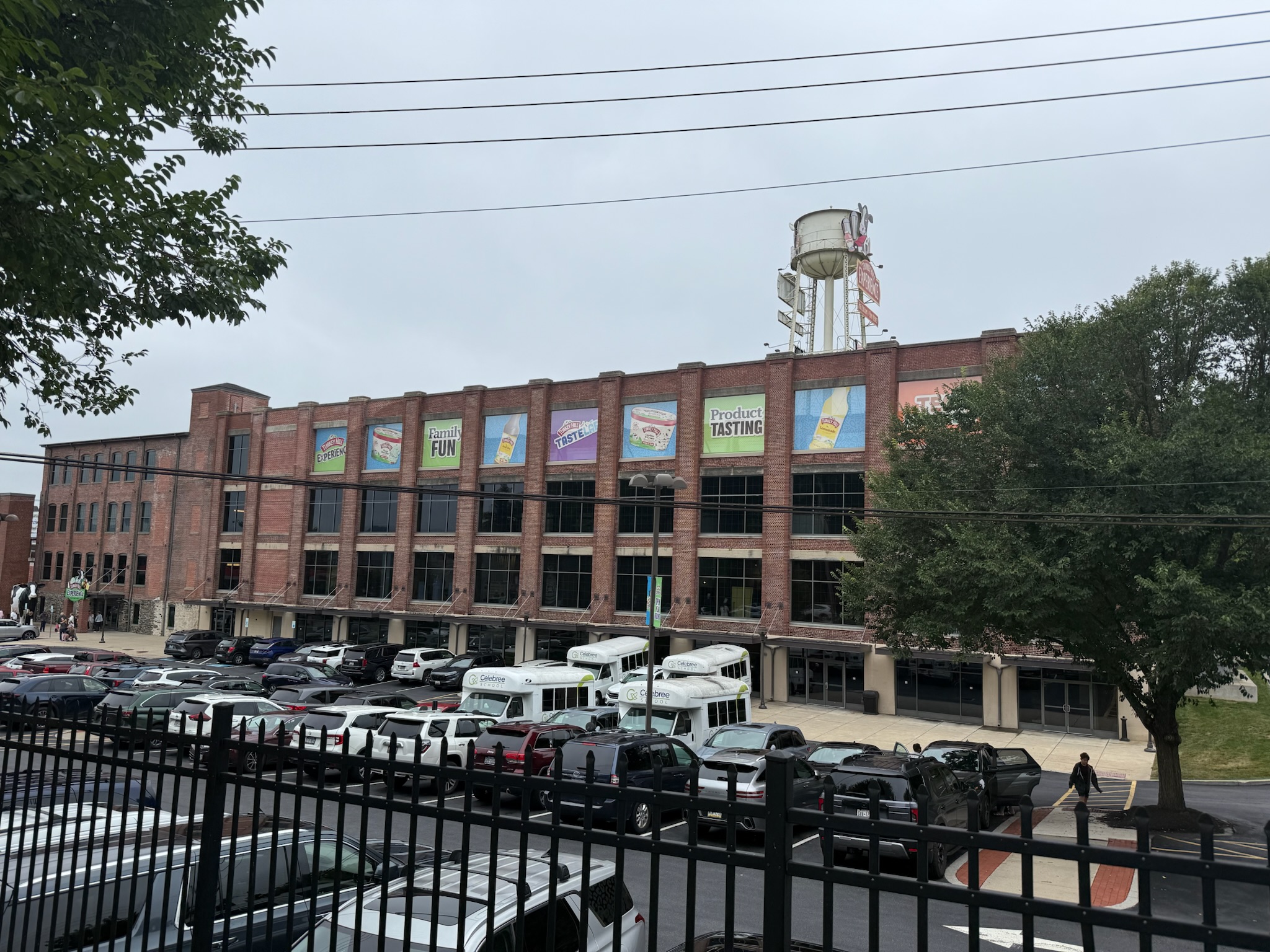
The building the museum was in was built in 1889 and was a silk mill until 1988.

We were surprised to find it wasn’t a factory tour at all — the factory was actually a few miles away. It was a children’s museum focused on all the various aspects involved in ice cream making. The exhibits were educational, but more importantly, they were interactive and fun. Given that it was a rainy day, it was no surprise that the museum was packed with families with small children and a couple of day camp groups. Several of the day camp kids had blue rings around their mouths, so we knew one of the ice cream flavors was blue! We felt sorry for the day camp counselors having to deal with kids super hyped up on sugar!

Continue reading