continued... Once tobacco exports were established, the tobacco farmers quickly grew wealthy. They used their money to buy even more land, taking all of the prime locations. As the society evolved, these large plantation owners dominated Virginia’s economy and government. In 1670, laws were changed so that property ownership and payment of taxes was required to vote or hold public office (both white and black), giving the plantation owners even more power over everyone else.
There had already been growing tensions amongst the freed indentured servants. The plantations primarily utilized slaves, so there were no jobs for these freed men to go to after their time in service ended. While they could start their own farms, they’d have to go to the edges of the settled areas, where there would inevitably be conflicts with the indigenous over the land. While the Powhatan (and tribes under the Powhatan umbrella) had made an agreement with the colonists, the colonists were now expanding beyond the Powhatan lands into areas with no such agreements. The government of Virginia did little to help protect these outlying farms from attack.
In 1674, Nathaniel Bacon arrived in Virginia. Bacon was arrogant, bold, active, moody and taken to alarming outbursts. He was also charismatic and an eloquent speaker. He was cajoled into leading a rebellion of disgruntled colonists. Some of the elite who were concerned about government corruption and mismanagement joined the rebellion, too. In 1676, Bacon formed his own militia whose goal was to remove all indigenous from the lands. They attacked and killed some Pamunkey, who were a friendly indigenous tribe under the Powhatan umbrella. The indigenous retaliated. The governor was furious that Bacon’s militia had disrupted peace with the Pamunkey as they’d had a lucrative fur trade relationship with them. In September 1676, there was a battle between the Virginia Militia and Bacon’s Militia in Jamestown. Bacon’s militia set fire to the town. Soon after, Bacon died of illness and the rebellion fizzled. The Queen of the Pamunkey signed a peace treaty with the colonists on behalf of her own tribe and several others that lasted almost 100 years
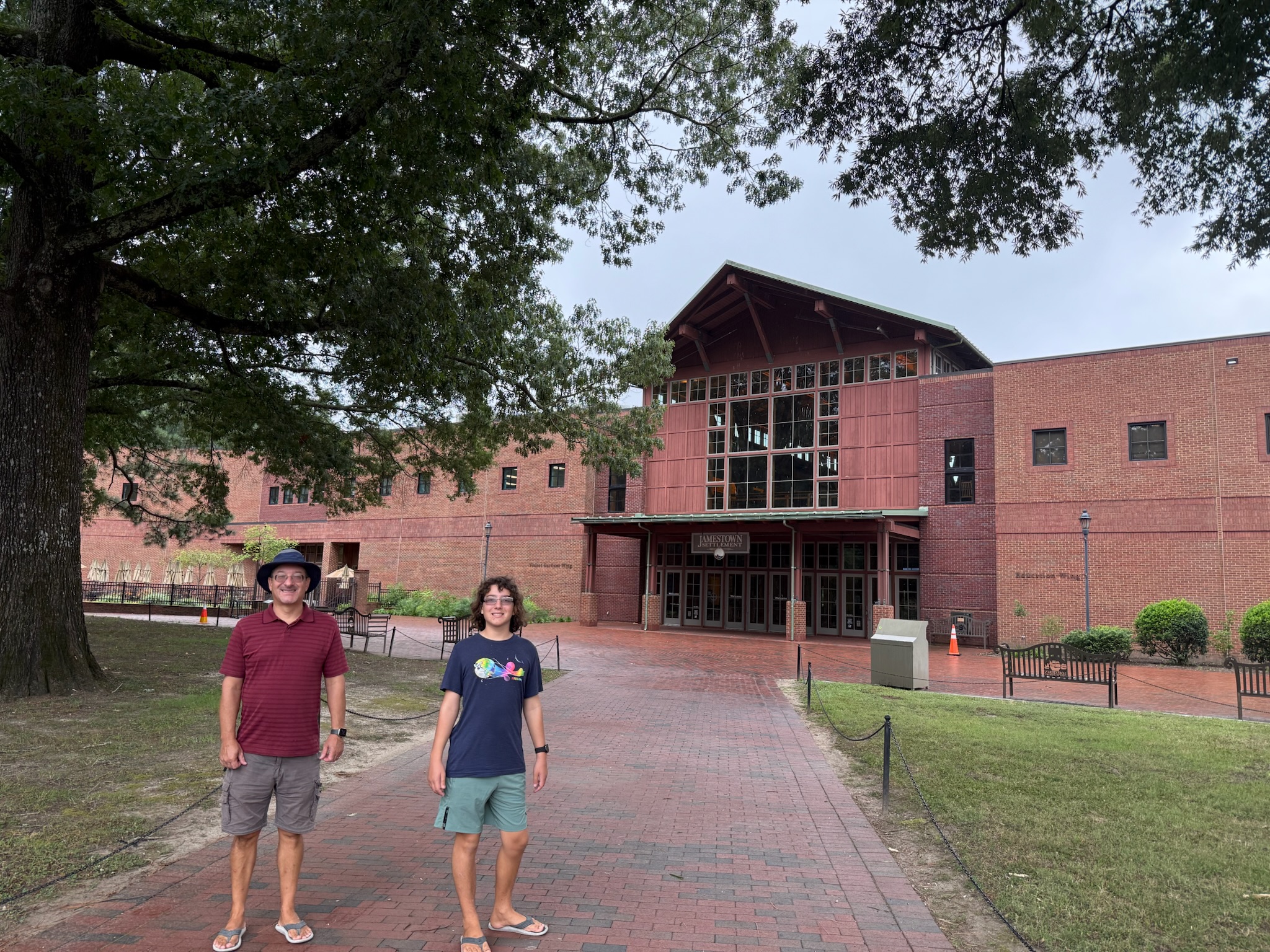
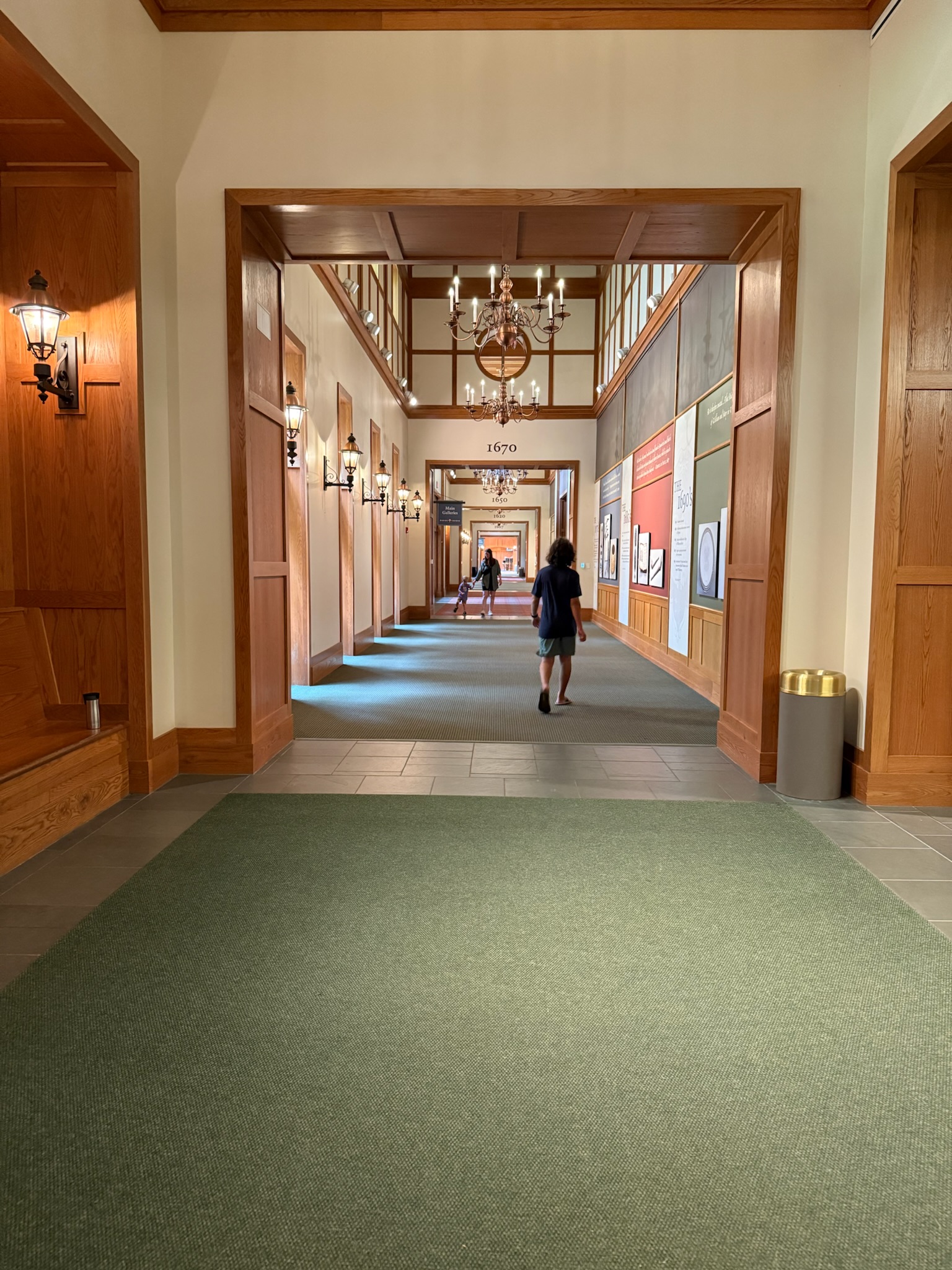
The capital of Virginia was moved to Williamsburg, ten miles away, in 1699. By that time, Virginia had grown from 104 colonists in Jamestown in 1607 to 60,000+ people spread all over the Virginia territory. Only about 600 Powhatan still remained in the English controlled areas. Blacks made up 10% of the population. Most people worked on plantations. After the capital moved, Jamestown declined rapidly. By 1716, all that was left was a church, a court house and three of four houses. Eventually, those buildings were cleared for agriculture. Once we’d finished in the museum, we headed back out to explore the fort some more.