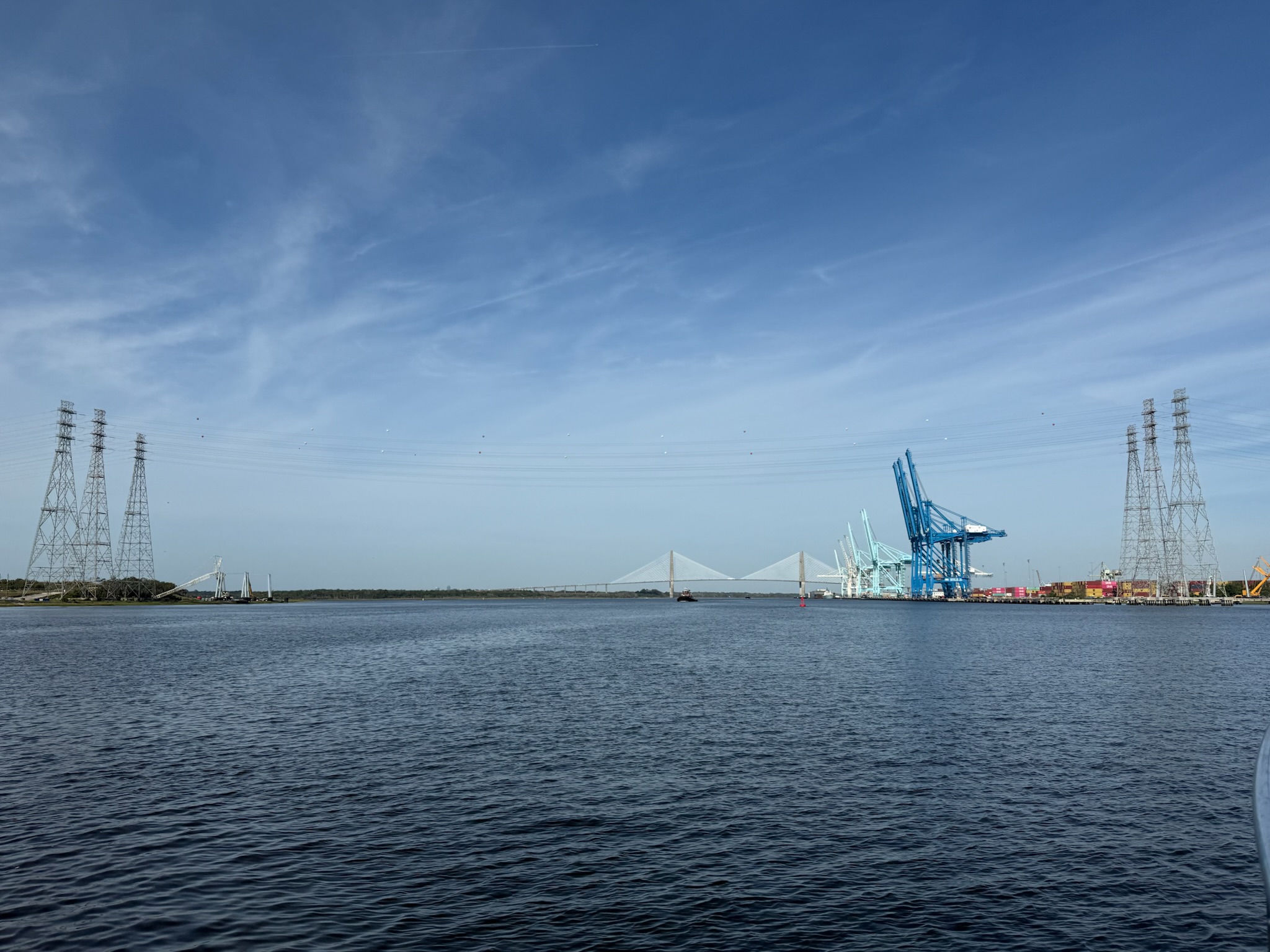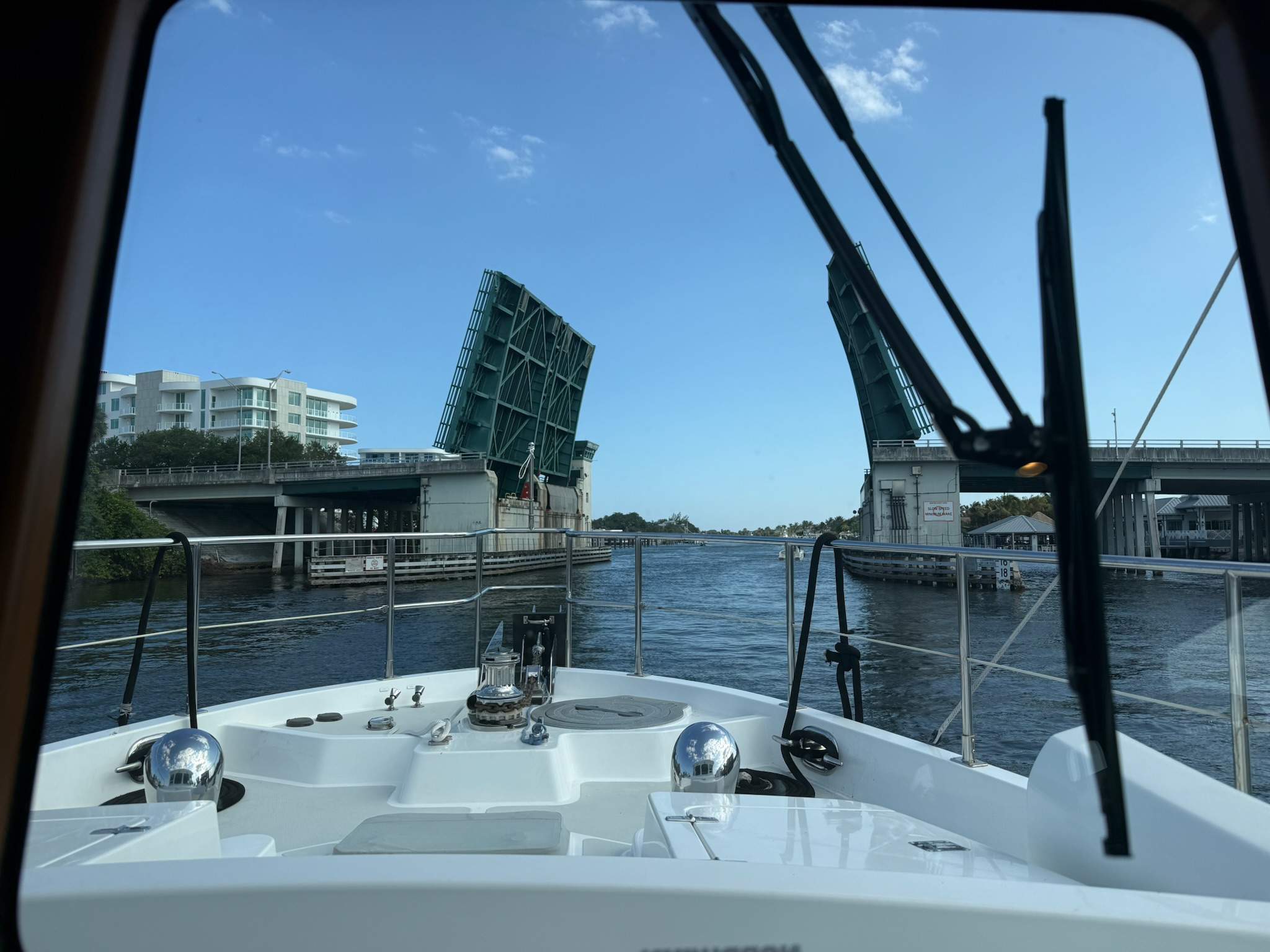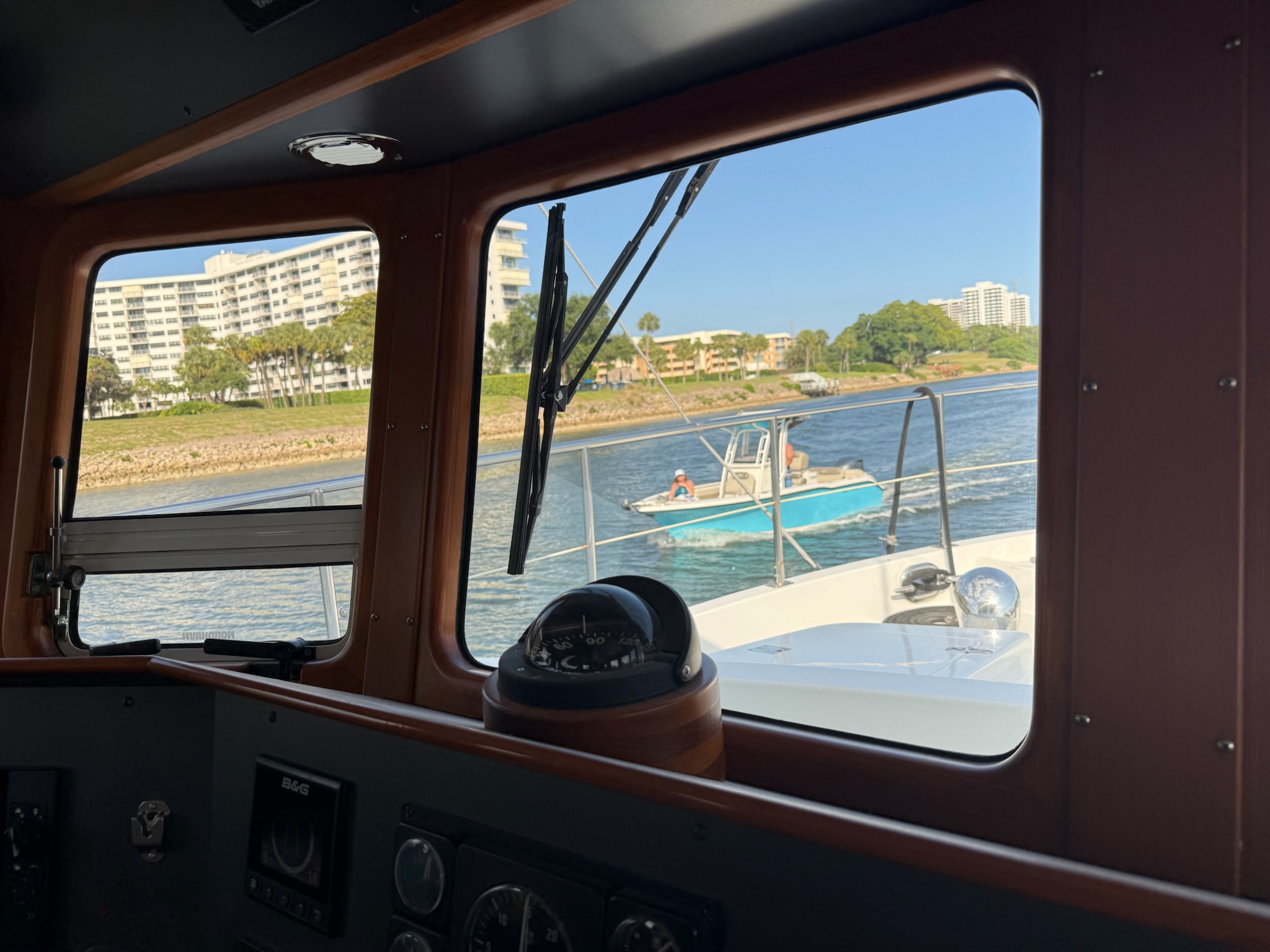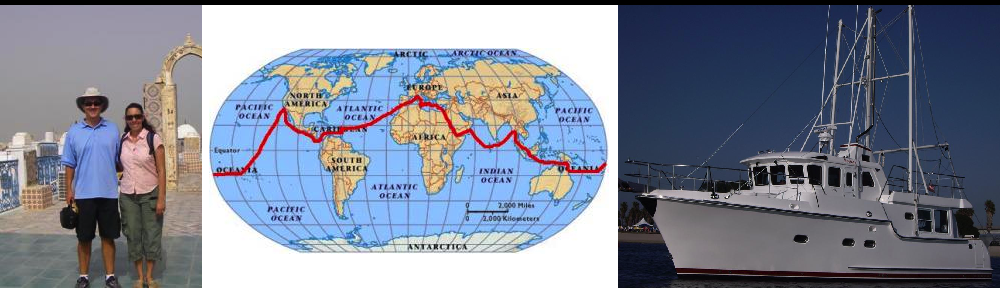
Thursday, April 30 — As we’ve already reported, Kosmos was hauled out on Monday, April 13 to have assorted work done, mostly preventative maintenance. We’ll do a complete write up of the work done in a separate post. This is just a quick summary of how Christi, Eric and Keith spent their time while Kosmos was out of the water.
Eric spent the majority of the days onboard Kosmos. Each day, he looked at what was scheduled to be done and helped clear spaces for the workers, then put everything back away once they were done. He monitored the work that was being done and helped as much as was viable. As we’ve mentioned in previous posts, Eric was frustrated that he’d hurt his back and was unable to do as much boat work himself as he would have preferred. He began pursuing care. He visited a doctor and had tests run. Once he had an understanding of what the issue was, he began trying some strategies to help facilitate healing.
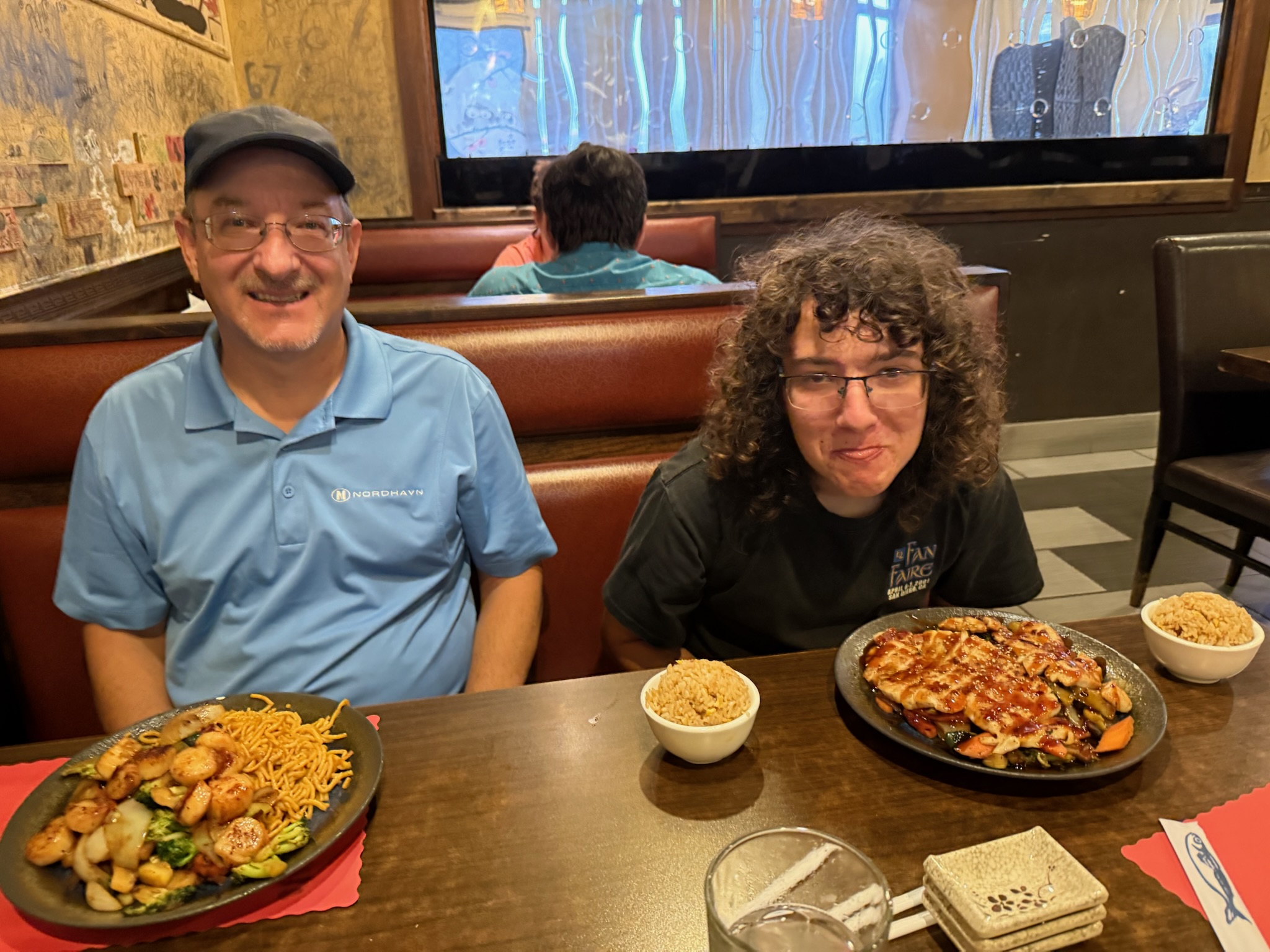
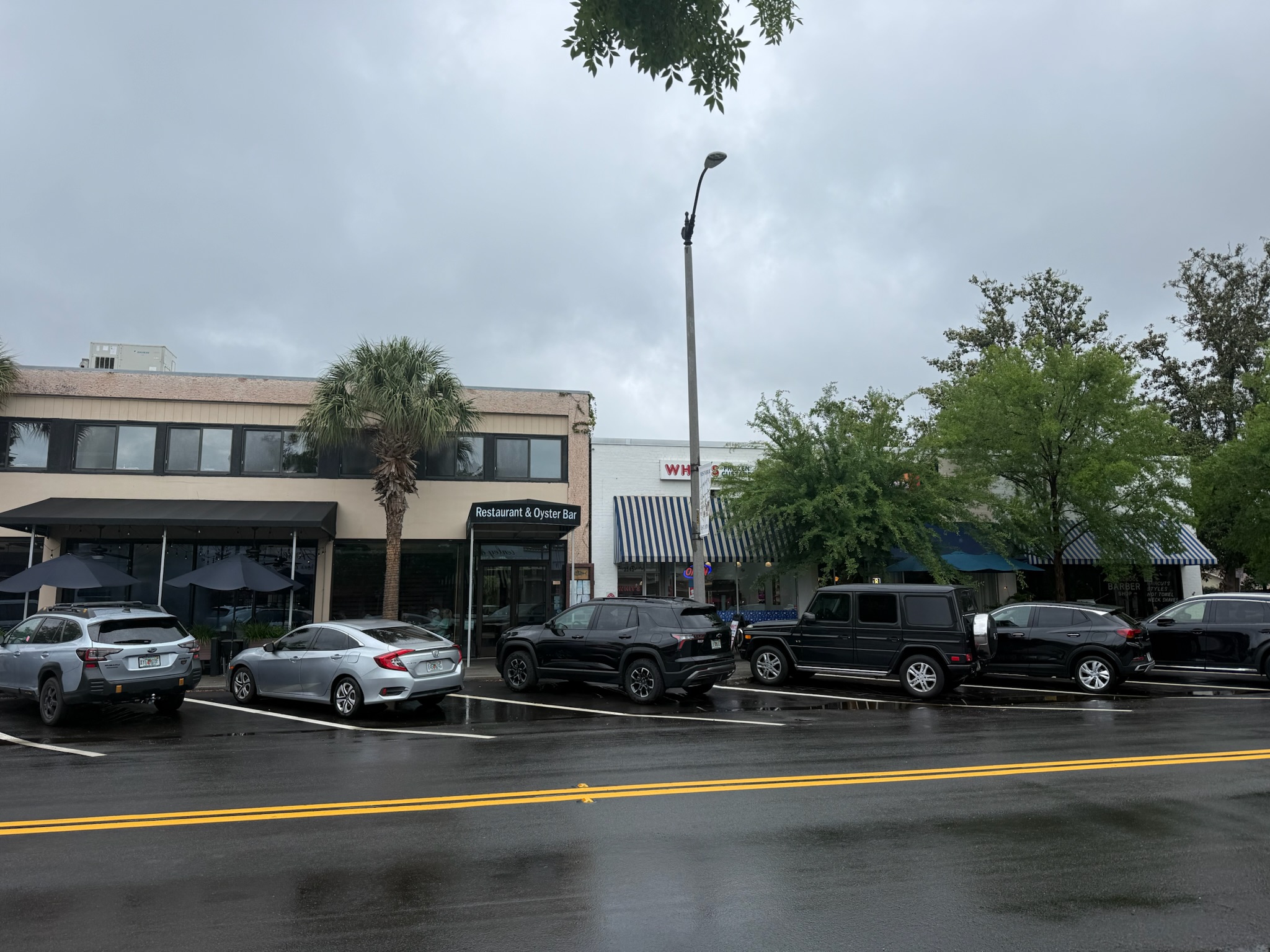
He tried a couple of new restaurants. One was a pizza place called DeSanos, which had real Italian thin crust pizzas, that he really liked. He also tried a breakfast restaurant called Sarah’s Cafe, located in the same shopping center as Doris and West Marine. Sarah’s was not bad, but he preferred Berries & More.
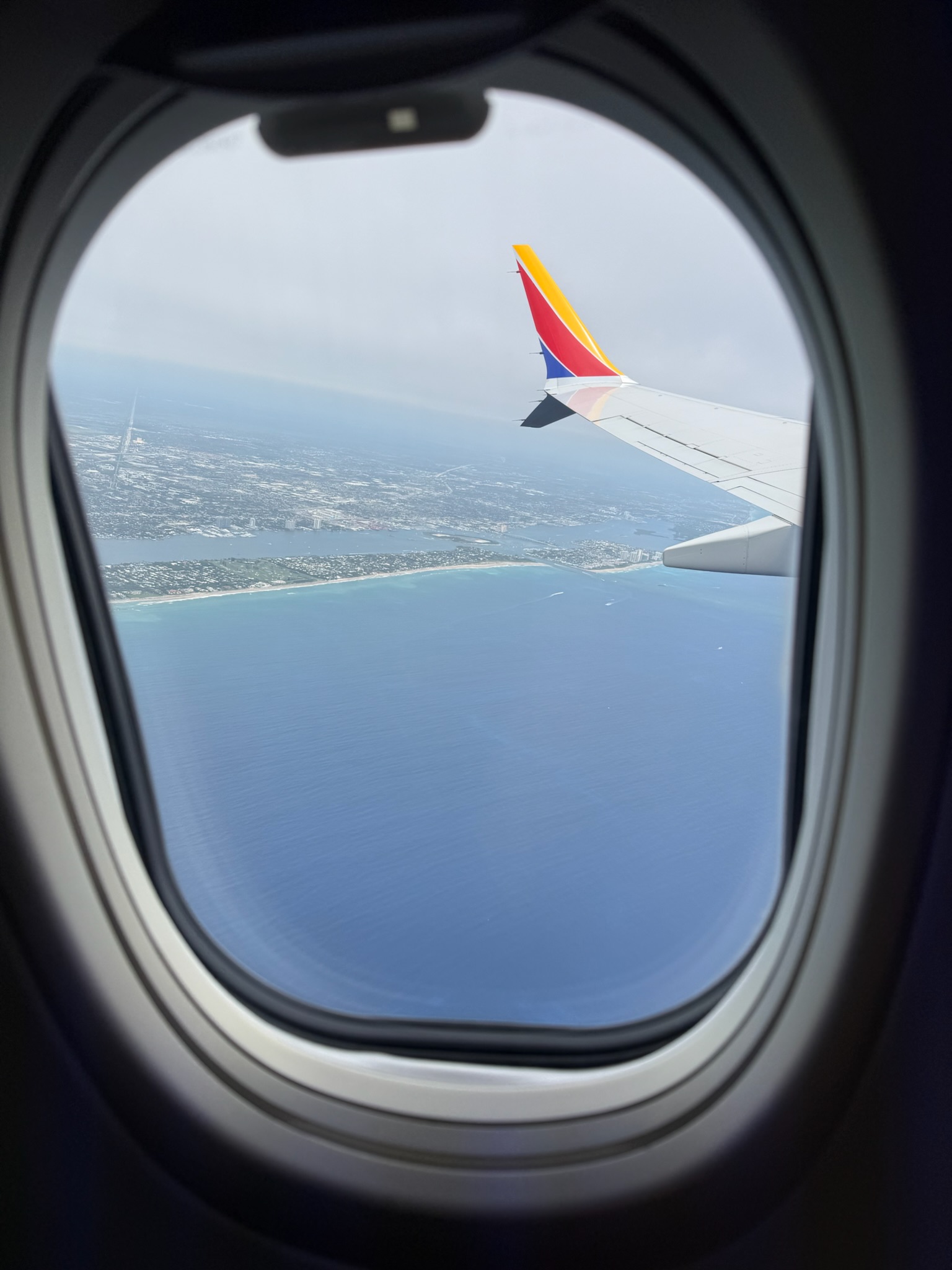
Christi and Keith flew to San Diego on April 16. Leaving Palm Beach.
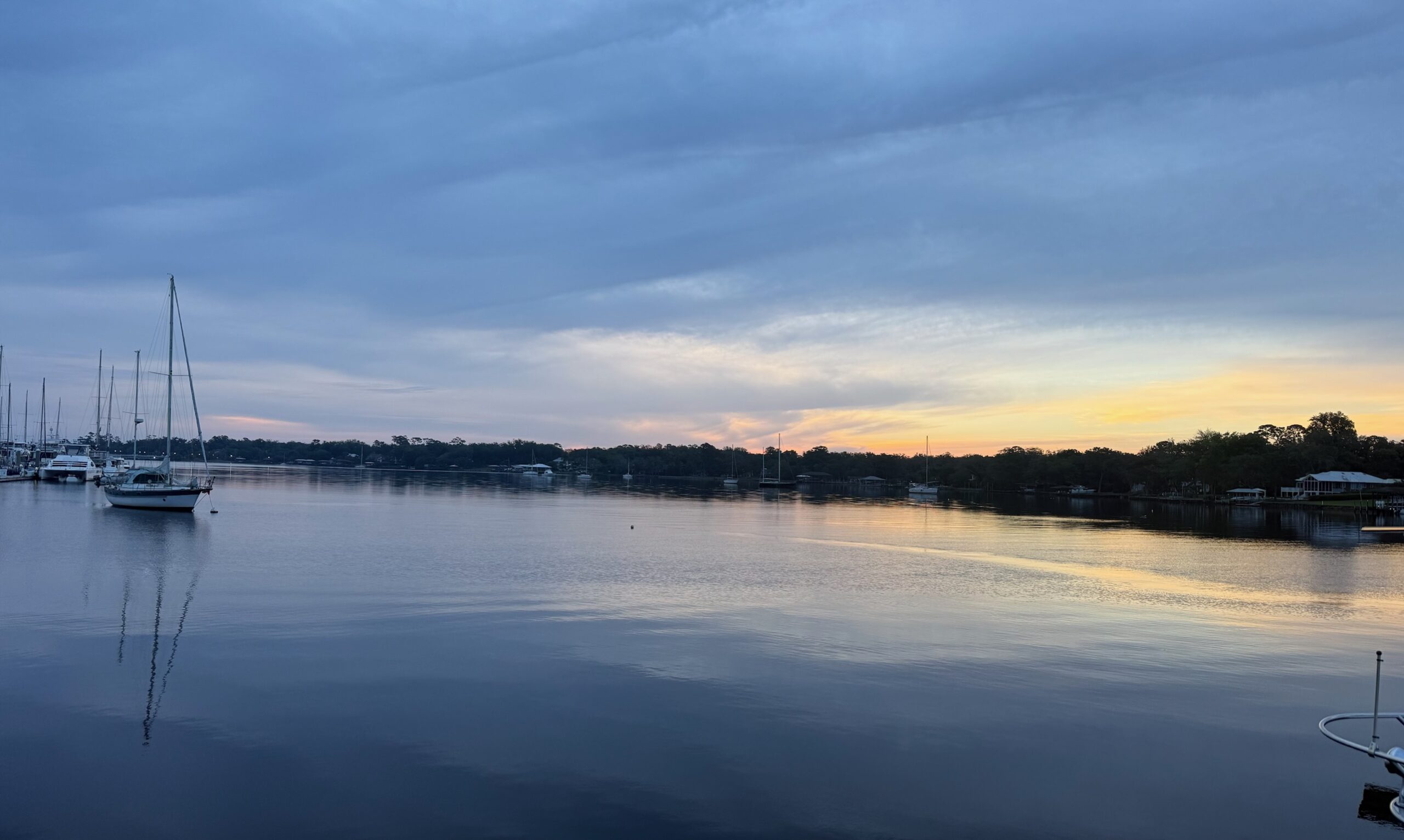
The sunrise on Sunday, April 12, 2026 was mostly blocked, but a sliver of sun managed to peep out from behind the clouds.
Saturday, Sunday and Monday were quiet days. We spent all three days doing chores around the boat in preparation for the haul out. We did lots of odds and ends, such as cooking up everything in the refrigerator that wouldn’t last for a couple of weeks and removing the storm plates from the windows. Last week, Eric had turned off the generator through-hull and opened up the generator so that the raw water pump could be changed. He got confirmation that it would be changed in the yard, so he put the generator back together and turned the through hull back to open on the off chance that it may need to be run. Someone came to pump out the blackwater tank. Eric and Keith also cleaned up rust stains that we’d noticed around the boat.
On Monday afternoon, we checked into a motel near the marina. It certainly wasn’t fancy, but it was the best deal in the area in terms of value for the money. Last year, this motel had been booked and Eric had been forced to stay farther away. He was happy about being closer this year.
Wednesday, April 8 — The last few days have been low-key, mostly spent onboard.
On Monday, a Yacht Tech worker knocked on our door first thing in the morning, while Keith and Christi were doing school. Eric had no idea which projects they were going to do in which order, so while he’d already prepped the boat as much as he could, he couldn’t get completely ready without knowing the order. The worker said he was there to change the group 31 battery in lazarette that started generator and wing engine. Eric had to quickly empty out the laz so he could access the batteries.
Eric generally tried to do as much work on Kosmos as he could, and it was kind of hard for him to pay someone to do this task because it was something he could have done himself. However, doing so involved awkward twisting in a tight space, and he didn’t want to risk hurting himself again.
While the technician was working in the lazarette, Eric removed the sight gauges on the two 60-gallon water saddle tanks. He’d thought it would be a terrible job involving moving both fridges, but on Friday, the supervisor who’d come out had said it would be easy, so Eric did it himself. It was indeed easy. Once he had undone the screws, we held buckets under the screw holes so the water could drain out. It dripped for a long time after we thought the tanks were already empty. After a few minutes, we had Keith run from port to starboard and back again for a few minutes to rock the boat and help drain the excess water.
Thursday, April 2 — It rained hard all morning, but the forecast said it was supposed to stop in the afternoon. By the time Christi and Keith finished school, the rain had mostly stopped. Believing it was going to be clear for the rest of the afternoon, Keith and Christi hopped in the car and drove down to Ft. Lauderdale, which was about an hour drive south, to see Tiki Tour.
Shortly after getting on the freeway, a cloud rolled over that dropped rain so hard that there was no visibility. Maps re-routed us off the freeway, so we figured there must have been an accident ahead. The detour took us a couple of miles south before routing us back onto the freeway. The street route had many traffic lights, and it took a solid half-hour to drive those two miles. By the time we were back on the freeway, the rain had stopped and the freeway was clear.
Tiki Tour was anchored in the ICW near a bridge. Unfortunately, Christi was confused about which bridge and went to a spot about a mile away. After a bit of texting back and forth with Tiki about not seeing their boat, Tiki figured out we were in the wrong place. All in all, by the time we finally arrived at the correct bridge, the one hour drive had turned into a two hour drive.
While there had been heavy rain North Palm Beach, it hadn’t really rained in Ft. Lauderdale this morning, and no rain was in the forecast for the afternoon. Christi, Diane, Keith and Fynn went to the Hugh Taylor Beach State Park, located on the barrier island between the ICW and the beach. The entrance fee was $6 per vehicle or $2 per person if entering by foot, so it was actually cheaper for the four of us to take the car in than it would have been to walk in.
Per the map/brochure they gave us, the road did a one-way loop around the 180-acre park, with parking lots interspersed along the loop. We found a parking spot and began to explore on foot. Per the blurb on the brochure, the Tequesta Indians utilized this land during their annual migrations, but generally moved on quickly. The first permanent settlement in Ft. Lauderdale was the fort, which was built for the Second Seminole War, and was located about 2-miles south of the park. It sounded like Hugh Taylor Birch was one the earliest non-military residents in the area. In 1893, he started purchasing land in what is now part of the city of Ft. Lauderdale. Upon his death in 1943, he donated this piece of land to the city to be used to preserve a natural, wild area for the protection of wildlife. It was a surreal little rural oasis in the middle of the dense and bustling city.
The diversity of the park was surprising. On the south side was the ICW, with a sea wall and dock that offered great views of the nearby expensive waterfront homes.
There were quite a few walking trails. This one paralleled the road.
And several trails went through the center. Most of the trails we walked were quite different from one another.