Luxor – Temples and Faluccas

Continued from yesterday”¦ The next stop was a temple called Djeser-djeseru (Sacred of Sacreds), built by Hatshepsut, ancient Egypt’s only female pharaoh. The site is also called Deir al-Bahri, after a Christian monastery that once stood here. When it was first found in the mid-19th century, it was in ruins. A team has been working on restoring it since the 1960’s. From the distance, it looks remarkably intact. The temple is built into a mountain face, three stories of evenly spaced pillars on a terraced base.

dsc01382-small.JPG

We ascended to the courtyard on the top floor. Here the carvings were faint, worn by the sun, but it looks like at one point in time every inch of wall space and all the pillars were carved. The pillars were very tall, but Continue reading

Luxor – The Valley of the Kings

After a tasty buffet breakfast at the hotel, our first stop was to a shop that hand carved alabaster and other stones native to the area. A crew of four people demonstrated how the carving is done. Alabaster is a hard, translucent stone that comes in three colors. To carve vases, cups, bowls, etc. by hand, they put a block into a hole in the ground and use a special hand drill to make a hole in it. They continue drilling until the hole is the right size, then hand chisel it down to the correct shape, then sand and polish it. Hand carved alabaster is Continue reading

City of Luxor – Karnak Temple Complex, Papyrus & Carriages

Continued from yesterday”¦ We back tracked and went through the opening that we had shown you. It leads into another courtyard area outside the Temple of Mut. In the courtyard is the top portion of a fallen, broken obelisk (tall rectangle with a pencil point tip) and a statue of a scarab beetle. It was believed that the scarab beetle had lots of powers, including good luck and fertility. If you circle the statue once, you will have good luck. If you circle it three times, you will get a baby. A British couple in our group said that after 5 years of infertility, they walked around the beetle statue three times and got pregnant. They swore by it. We only walked around it once.

imgp4221-small.JPG

The formal tour concluded with the beetle statue and we were free to roam the grounds and look at the rest of the temples on our own. All were amazing, some better preserved than others. The Temple of Mut is mostly ruins, but here is a shot of the statues flanking the entrance.

imgp4248-small.JPG

We spent quite a bit of time at the Festival Temple of Continue reading

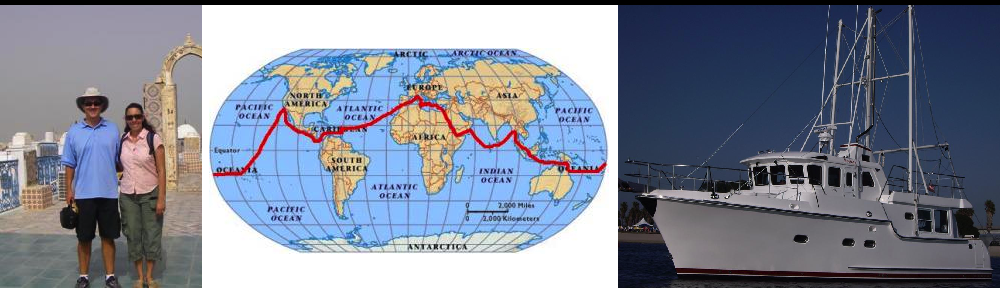
Travel Summary January 2008 to June 2008

Indonesia to Egypt

  • West Timor Island, Nusa Tenggara, Indonesia
    10° 9S by 123° 34E
    Dec 27 – 31, 2007 & Jan 2 – 9, 2008
    Traditional village tour
  • Flores Island, Nusa Tenggara, Indonesia
    08° 50S by 121° 30.8E
    Jan 10 – 15, 2008
    Crater Lakes
  • Rinca Island, Nusa Tenggara, Indonesia
    8°39.15S by 119° 42.9E
    Jan 16 -24, 2008
    Komodo Dragons & other native wildlife
  • Labuan Bajo, Nusa Tenggara, Indonesia
    08° 29.5S by 119° 52.5E
    Jan 21 -24, 2008
    SCUBA Diving
  • Bali, Indonesia
    08° 44.5S by 115° 12.7E
    Jan 25 – Feb 8, 2008
    UN conference, island tour, whitewater rafting, SCUBA Diving, Monkey Forest, traditional show
  • Karimata, Indonesia
    01°40.7S by 108° 54.2E
    Feb 12 – 14, 2008
    Medical assistance to islander
  • Sentosa Island, Singapore
    01°14N by 103° 50E
    Feb 12 – Mar 08, 2008
    Side trip to Hong Kong, Museums, Rides
  • Port Dickson, Negeri Sembilan, Malaysia
    02° 31N by 101° 48E
    Mar 8- 18, 2008
    Side trip to Malacca
  • Langkawi Island, Kedah, Malaysia
    06° 21N by 099° 40E
    Mar 20 – Mar 28, 2008
    Sky ride, Geoforest Park, waterfall hike, extravagent gift museum
  • Ko Muk Island, Trang Province, Thailand
    07°23N by 099°17E
    Mar 28 – Apr 2, 2008
    Emerald Hawng
  • Phi Phi Islands, Krabi Province, Thailand
    Don: 07°43N by 098°46E
    Li: 07°40N by 098°46E
    Apr 2 – 4, 2008
  • Phuket Island, Phuket Province, Thailand
    Ao Chalong: 07° 49N by 098° 21E
    Nai Harn: 07° 46N by 098° 17E
    Apr 4 – 17, 2008
    Traditional dancing, Elephant ride, Hawng tour, Fantasea show
  • Port Blair, Andaman Islands, India
    11° 40N by 092° 42E
    Apr 17 – 23 & 29, 2008
    Visit to Ross Island
  • Havelock Island, Andaman Islands, India
    11° 59N by 092° 56E
    Apr 23 – 29, 2008
    SCUBA diving, Elephant training camp
  • Male, Maldives
    04° 13.0N by 073° 32.0E
    May 02 – 18, 2008
    SCUBA diving
  • Port Salalah, Dhofar, Sultanate of Oman
    16° 56.2N by 054° 0.2E
    May 21 – Jun 02, 2008
    SCUBA diving, Guided Tour Dhofar
  • Port Ghalib, Marsa Alam, Egypt
    25°31N by 34°38E
    Jun 13 – 17 & Jun 23 – Jul 05, 2008
    SCUBA diving, Trip to Luxor to see Temples & Burial Tombs

Trip to Luxor and the Karnak Temple Complex

The alarm went off at 0300, which was painful. At 0400, we were in the lobby of the hotel, waiting for the bus to pick us up. We told our French friends about the tour, and they decided to come too. 5 minutes later, we were on our way. The bus was really nice, with comfy seats. We followed the coast north to a town called Safaga, stopping to pick up people along the way. In Safaga, we joined a convoy of 70 tourist busses, all going to Luxor. There have been issues with terrorist attacks against tourists in the past in Egypt, so the government requires that all tour groups travel in a police escorted convoy through the desert. At 0730, the convoy pulled out, heading east towards the mountains.

The mountains are as dry and barren of life as the coast. For part of the way, there wasn’t even any scrubby little desert plants around. The mountains look very unstable, like soft rock that easily breaks apart. In some places, the mountains are large solid boulders, but in other places, it looks like the boulders have eroded into piles of rocks and dirt.

Around 1000, we reached the Nile valley and turned to follow the river. The guide explained to us that in Upper Egypt, people were still very traditional and followed the old, customary way of life. The people are still farmers, and they have very few modern tools to farm with, preferring farming by hand. Houses are made from mud brick with ceilings made of plant stalks. Houses ranged in size from one room, one story to very large three stories. Apparently, as the family grows, they just add more rooms/stories to the existing house. Despite the old fashioned ways, virtually all the houses had satellite dishes on the roofs. Few women were out, and all wore the black robes and black head scarves. There were lots of men out, and all were dressed in what look like old fashioned pajama dresses that go to the ankles and are long sleeved. The land was all farmland dotted with clusters of houses and the occasional mosque. It looks like they grow a large variety of produce.

imgp4182-small.JPG

At 1100, we rolled into Luxor. From what we could see, Continue reading