The Perlan Museum, Reykjavík, Iceland: Part 2 – Lava Rides, Ice Tunnels, Glaciers and Fresh Water

Continued… We were promptly escorted into a small amphitheater with uncomfortable bench seating. They showed a film of a recent volcano eruption with footage taken from drones above the crater. It was shown on a big screen and was very impressive footage – there were even shots looking into the crater. There were lots of images of lava exploding out of the crater. There was an image of people standing at the edge of the crater where they could easily be killed by particles from exploding lava. There was footage of a crowd standing at the edge of a flow, congregated right where the lava stopped.

From there, we were escorted into another room. It looked like a small theater with a movie screen, a flat floor, and individual seats. We were directed to sit down. These seats were much more comfortable. At first we thought it was going to be another lava movie, but it turned out to be a 3-D simulator ride. The floor was glass and the movie was projected on three of the walls, the ceiling, and under the floor. The story was that we were inside a drone. It drove down under the water very deep into a volcanic crater. The crater was somehow protected from the water and was dry inside, which felt like a plot hole in the story. The drone landed on the dirt floor, then zoomed forward to where the lava was pushing up through a fissure. We flew over the fissure, then had to escape up quickly to outrun the lava. Then we were flying over the crater and the ride ended. Keith said the ride was creepy and he didn’t like it. Christi liked it better than Keith did, but she didn’t love it. She probably would have liked it more if it were a mellow experience than a death defying thrill ride.

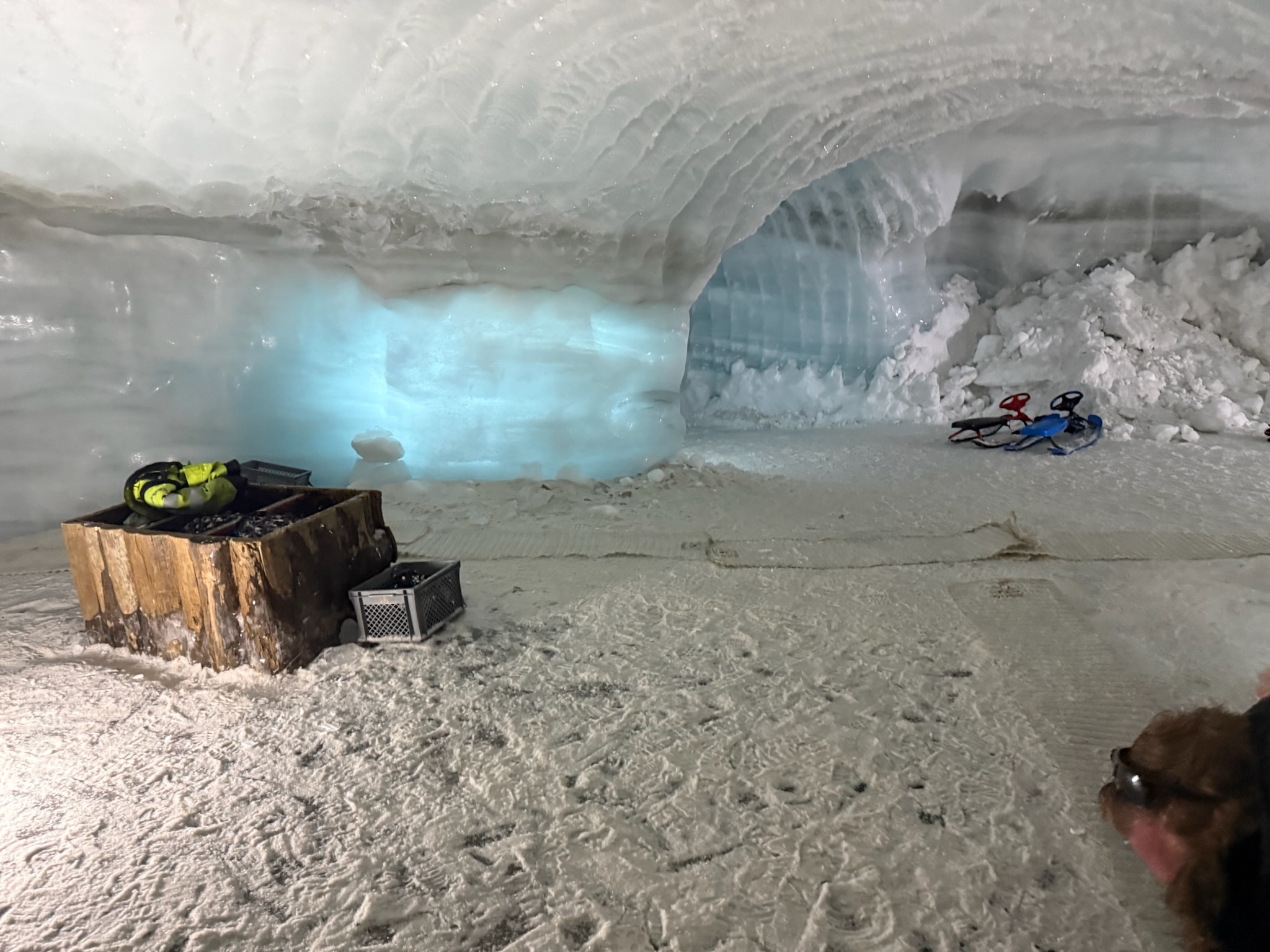
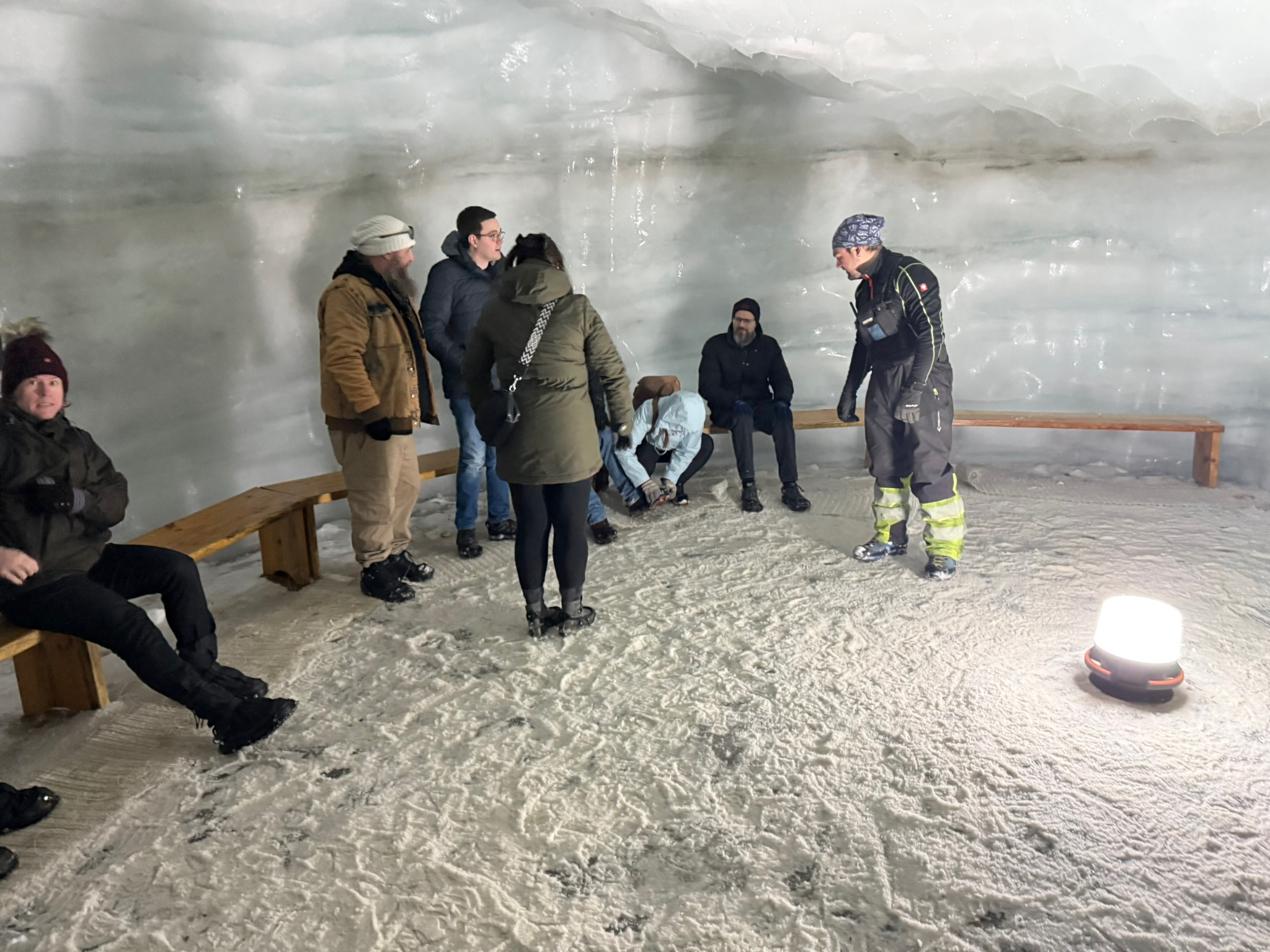
When the ride ended, the group was escorted into the ice tunnel. It was the only indoor ice tunnel in the world, and it was a recreation of the tunnel that Eric had gone to yesterday. It was real ice and they kept the temperature at 32-degrees Fahrenheit. There was a main tunnel that was tall enough to stand in and a few off shoot tunnels that were lower — we needed stoop over to get through those. There was the volcanic ash lines that Eric had told us about.

There was simulation of the crevasse that Eric had told us about.

Continue reading →
The Perlan Museum, Reykjavík, Iceland: Part 1 – History

continued… They perused most of the exhibits on the first floor while they waited for the volcano/ice cave tours to begin. The majority of the displays were about Iceland’s history, with about half focusing geological history and the other half human history.

With volcanoes, geysers, glaciers, earthquakes, a divergent tectonic plats and erosion, land was created and destroyed faster in Iceland than anywhere else in the world. Iceland first formed 64-million years ago, about the time that a cataclysmic event changed Earth. It sounded like it was initially connected to Greenland and Europe via land bridges, so animals could come and go. Thanks to continental drift and erosion, the bridge between Iceland and Europe eroded 10-million years ago. They missed the sign explaining when/how they separated from Greenland.

Over the millions of years, there have been at least five ice ages and also periods where the planet was so hot that there was little to no ice on Earth. There were points in time where Iceland was completely buried under snow and ice, and the land was devoid of flora and fauna. There were times where the temperature was so balmy that there was a wide variety of flora and fauna, including redwood trees. There were a lot of signs about various specific volcanic eruptions and the amount of land the eruption added to the island, as well as some signs that explained areas affected by glacial erosion. There were also a few that explained how some unique geological features, such as psuedocraters, formed.

Changes to the ocean’s currents (the Gulf Stream and the Atlantic Meridional Overturning Circulation [AMOC]) also affected Iceland’s development, temperatures (in and out of the water) and sea life. A rise of invertebrates being pushed in from other areas brought a rise in creatures that ate them, including whales and walruses. Twenty species of whales inhabited the waters around Iceland, and twelve of them were commonly seen. A sign explained how whales fed at the bottom of the ocean and then went up for air — often pooping on the surface. Doing this cycled the nutrients in the water from the bottom up to the surface, providing nutrients to the photosynthesizing creatures that lived on the surface. Other signs gave more detailed information on some of the species.

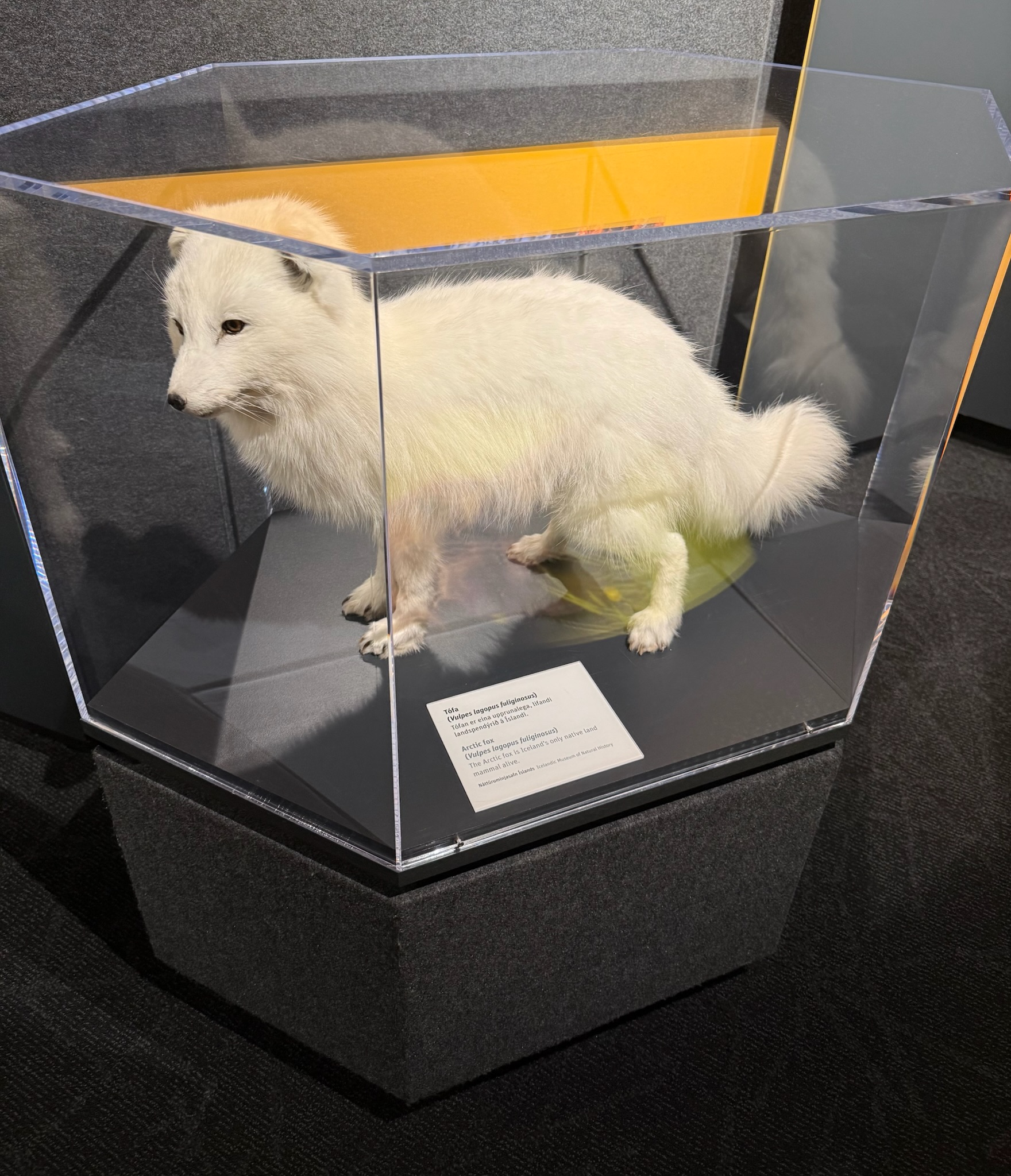
The only indigenous terrestrial mammal to Iceland in the current era was the Arctic Fox. They were omnivores that would eat just about anything, changed color from grey-blue when it wasn’t snowy to white when it was, lived in pairs, and had 4 – 6 cubs each spring.

Continue reading →

Downtown Reykjavík, Iceland

Thursday, May 14 — The alarm went off at 0600. Christi had a hard time getting up. She woke Keith up at 0630 and he also had a hard time getting up. They let Eric sleep. The conference was starting later than Christi and Keith’s tour was starting, so he didn’t need to get up as early as they did. Christi and Keith got dressed and left the hotel at 0720. The plan was to walk to downtown and eat at restaurant called Baka Baka, located near the Harpa, that served breakfast. Then they’d catch the tour bus at the Harpa.

As a side note, the hotel’s breakfast buffet was not included in the room rental fee. Since Christi and Keith didn’t love the breakfast yesterday they’d prefer to try another restaurant today.

Much to Christi’s frustration, about halfway to the destination, the cell service died and she was unable to access the map app on her phone. The streets were deserted — there was not another soul around to ask for directions. Christi and Keith were on their own to figure out where to go. And the map app had routed them on different streets than the taxi had taken, so nothing was familiar.

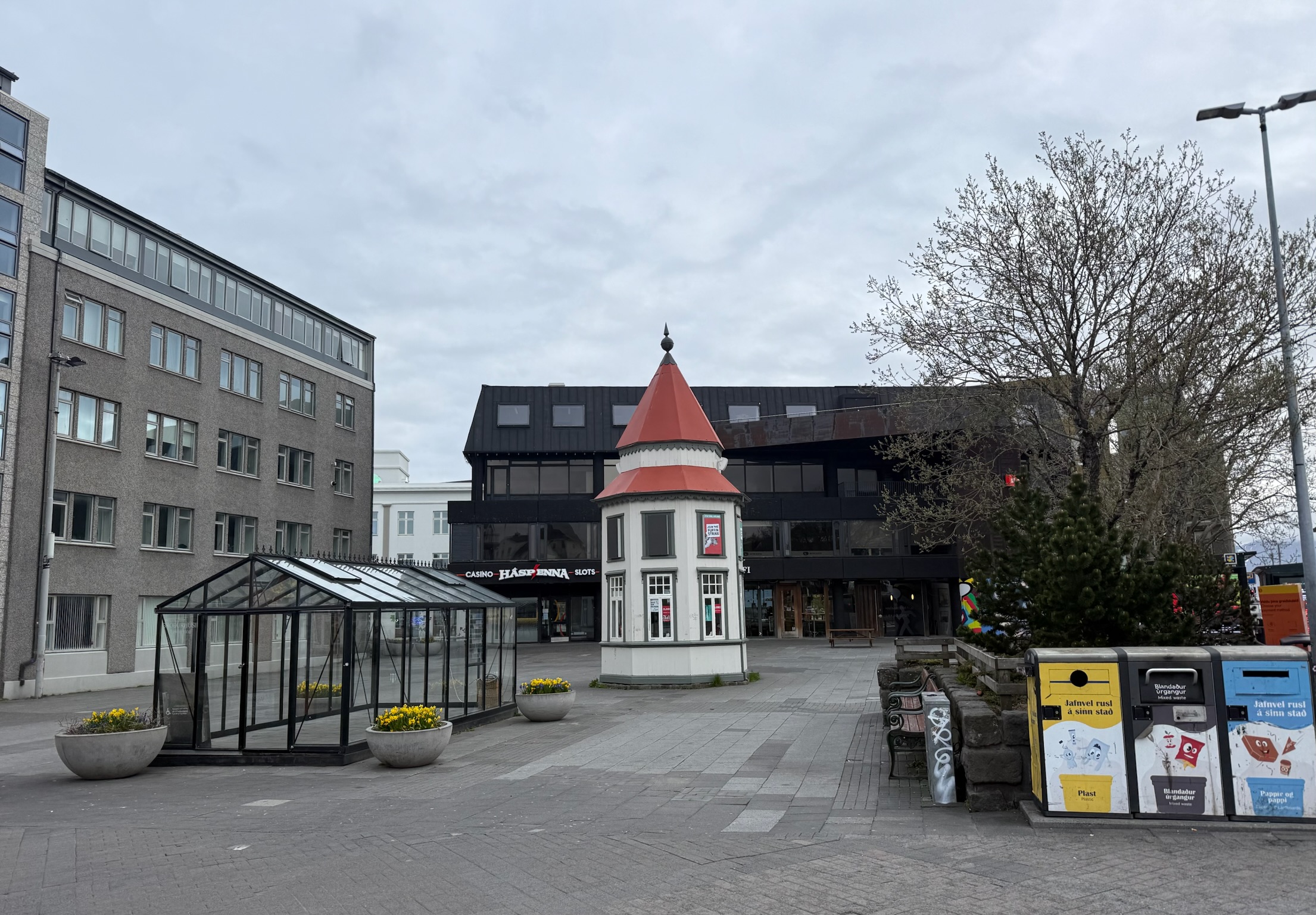
Christi knew their destination was to the northwest, so they tried to keep moving that direction. The small streets frequently dead ended at T-intersections, and they would turn and find the next street that seemed to be going north or west and follow it. They did eventually come to a courtyard area that Christi remembered from the map as the heart of downtown.

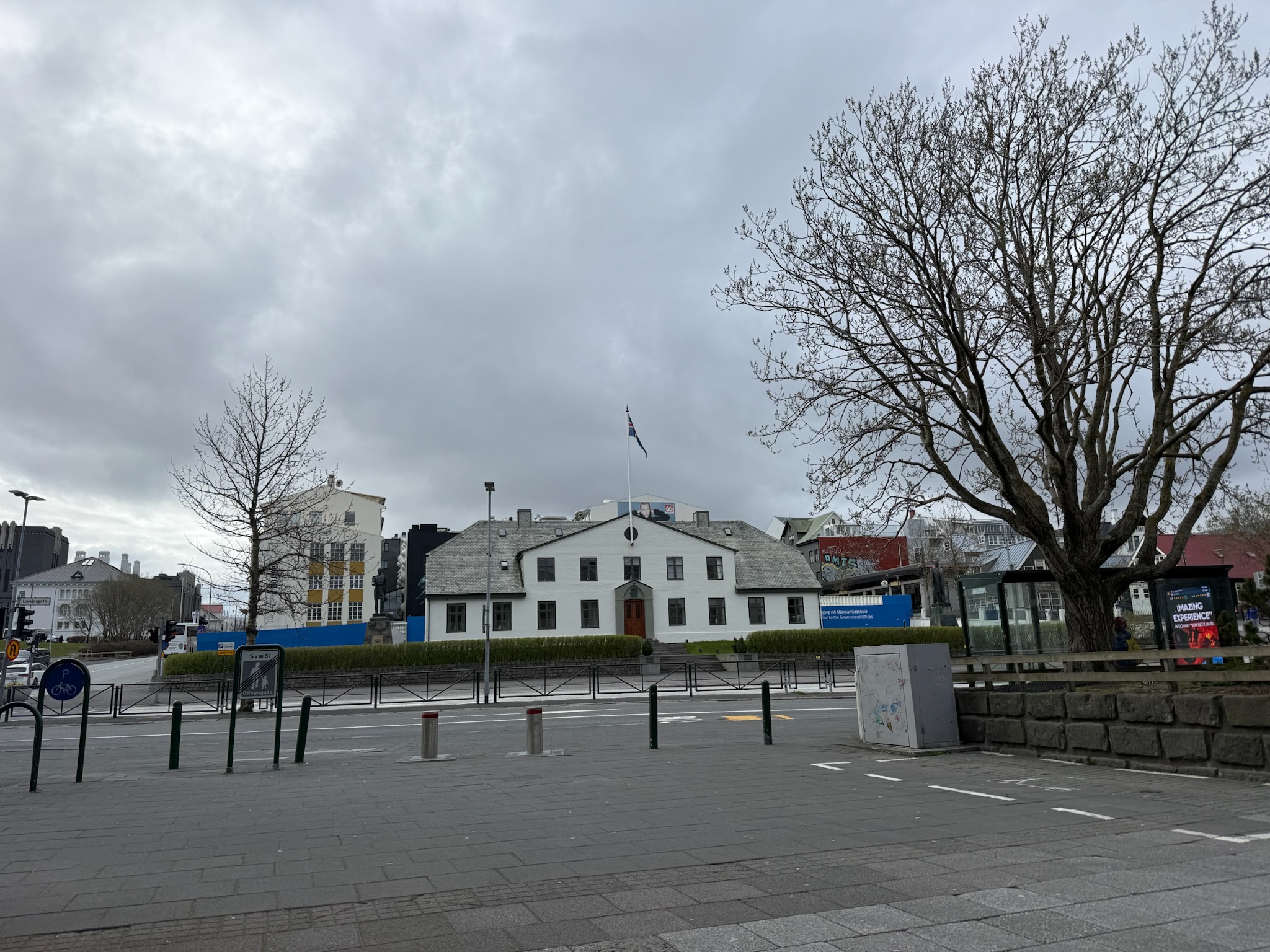
Christi knew Baka Baka was nearby. They wandered around in circles for a while, but never found it. Here were some photos of downtown.

Continue reading →

Drive Back to Reykjavík and The Hraunfossar and Barnafass Waterfalls

continued… At the base camp, the tour group got back into the regular bus for the return trip to Reykjavík. They passed an aluminum factory. While Iceland did not have aluminum ore deposits, it did have abundant and inexpensive electricity. And a lot of electricity is what was needed to process aluminum. So they bulk shipped in the ore, processed it, and exported it. Apparently, aluminum refining generated a significant amount of revenue for the country.

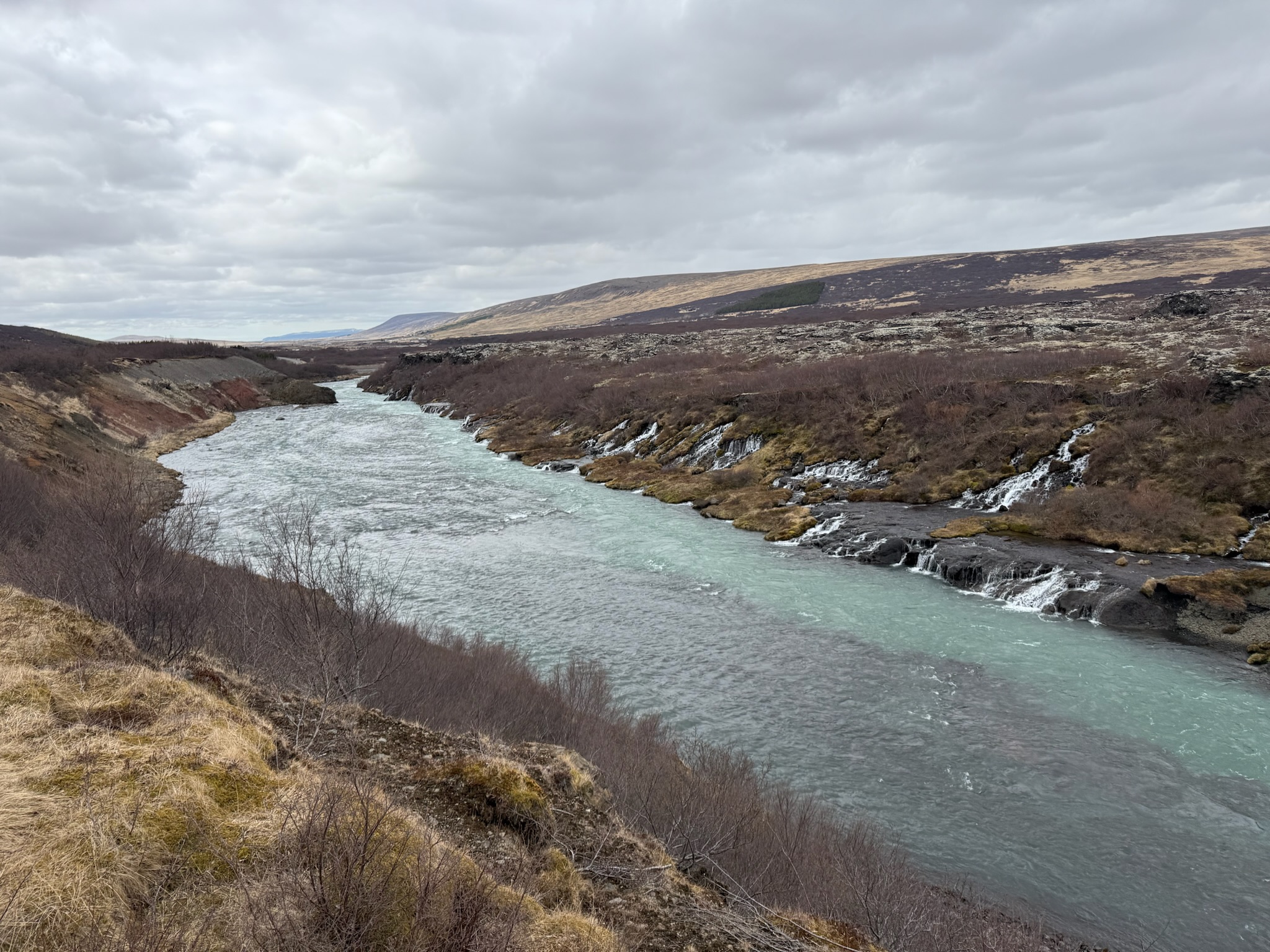
They stopped at the Hraunfossar and Barnafass waterfalls. Apparently, the smaller falls were Hraunfossar and the bigger ones above them were Barnafass. Here were some smaller falls (Hraunfossa) by the river leading the bigger falls.

Hraunfossar

The main waterfall area (Barnafass) was beautiful.

Barnafass
Continue reading →

The Ice Tunnel Inside Langjökull Glacier, Iceland

continued… The entrance was small and had a carpeted path to a large room with benches.

The guide said that they’d used the same equipment and crew to make these tunnels as they’d used to make the tunnel under the ocean that they’d driven through on the way to the base of the glacier. These were the longest man-made ice tunnels in the world, and they were created by farmers working to make a tourist attraction. The temperature was just below freezing inside, and apparently stayed relatively consistent year round.

Continue reading →