Thursday, May 14 — The alarm went off at 0600. Christi had a hard time getting up. She woke Keith up at 0630 and he also had a hard time getting up. They let Eric sleep. The conference was starting later than Christi and Keith’s tour was starting, so he didn’t need to get up as early as they did. Christi and Keith got dressed and left the hotel at 0720. The plan was to walk to downtown and eat at restaurant called Baka Baka, located near the Harpa, that served breakfast. Then they’d catch the tour bus at the Harpa.
As a side note, the hotel’s breakfast buffet was not included in the room rental fee. Since Christi and Keith didn’t love the breakfast yesterday they’d prefer to try another restaurant today.
Much to Christi’s frustration, about halfway to the destination, the cell service died and she was unable to access the map app on her phone. The streets were deserted — there was not another soul around to ask for directions. Christi and Keith were on their own to figure out where to go. And the map app had routed them on different streets than the taxi had taken, so nothing was familiar.
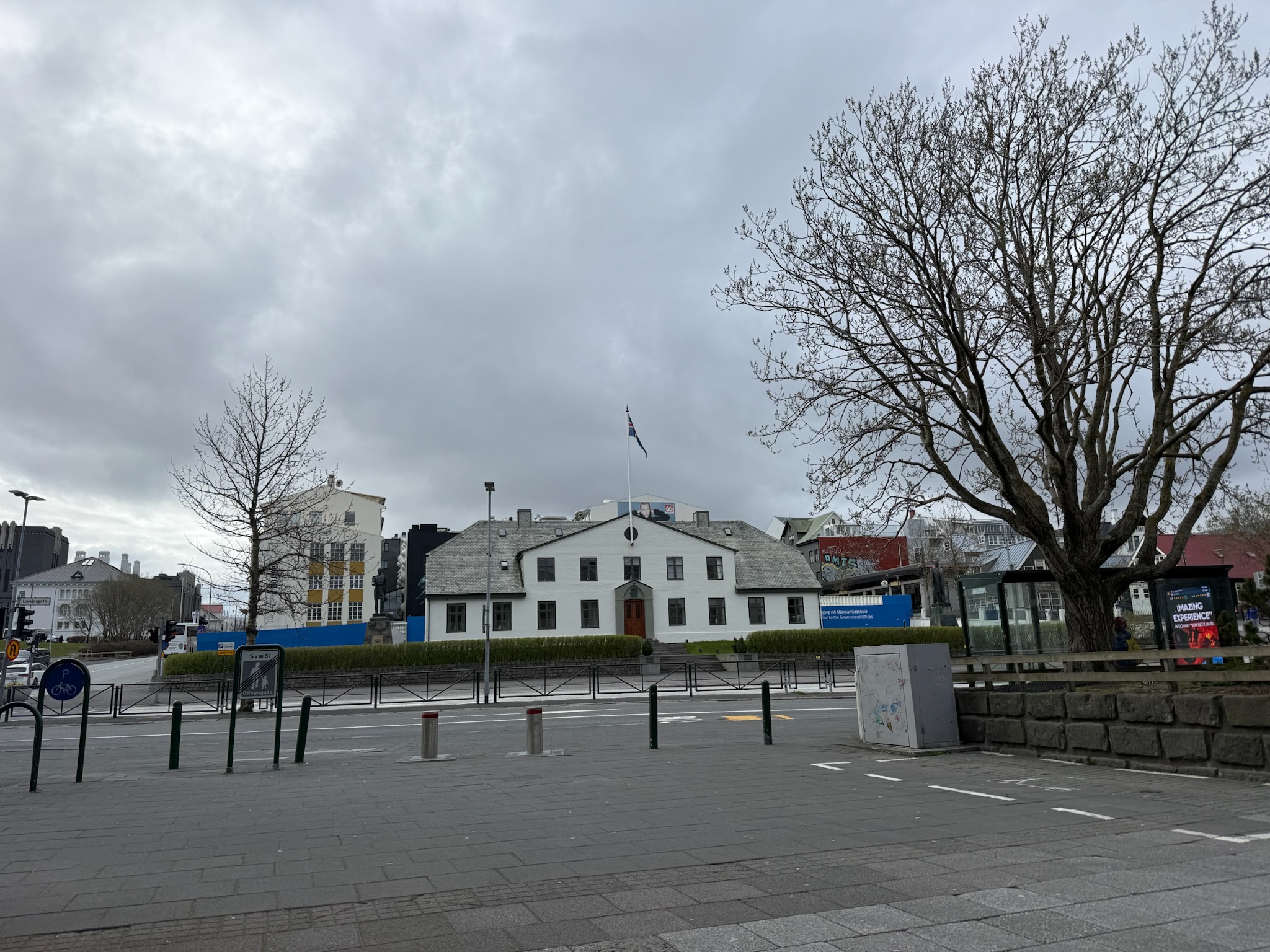
Christi knew their destination was to the northwest, so they tried to keep moving that direction. The small streets frequently dead ended at T-intersections, and they would turn and find the next street that seemed to be going north or west and follow it. They did eventually come to a courtyard area that Christi remembered from the map as the heart of downtown.
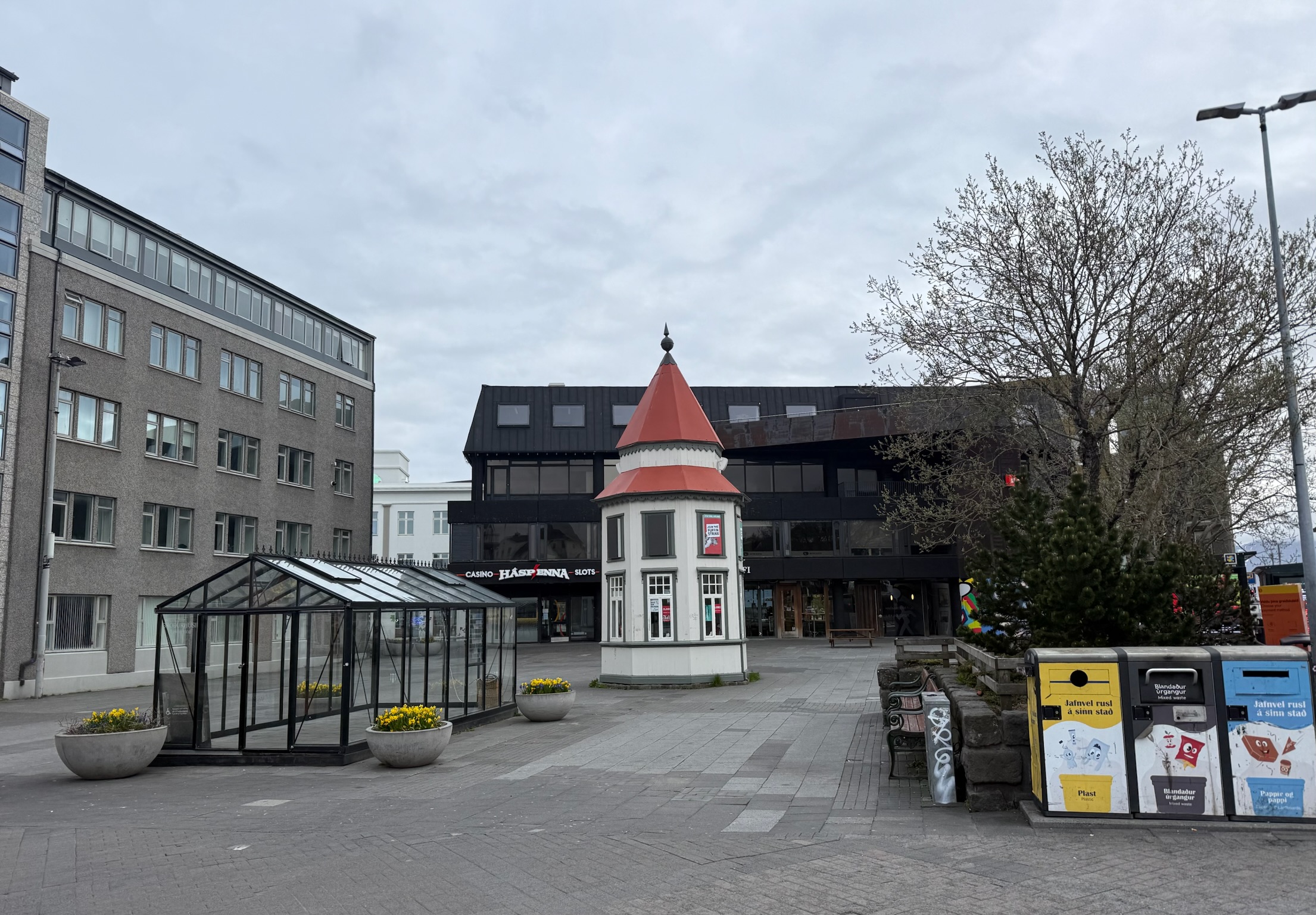
Christi knew Baka Baka was nearby. They wandered around in circles for a while, but never found it. Here were some photos of downtown.